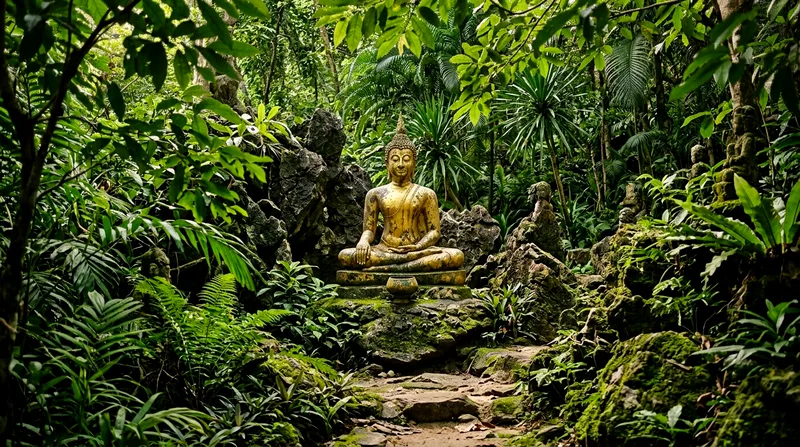
Secret Buddha Garden Ko Samui: Tours, Tickets & Access
Visiting Secret Buddha Garden Ko Samui: compare 4×4 tours vs motorbike access, entry fees, opening hours, and what to expect at this jungle site.
10 min read · 19 Oct 2026
Tours & activities
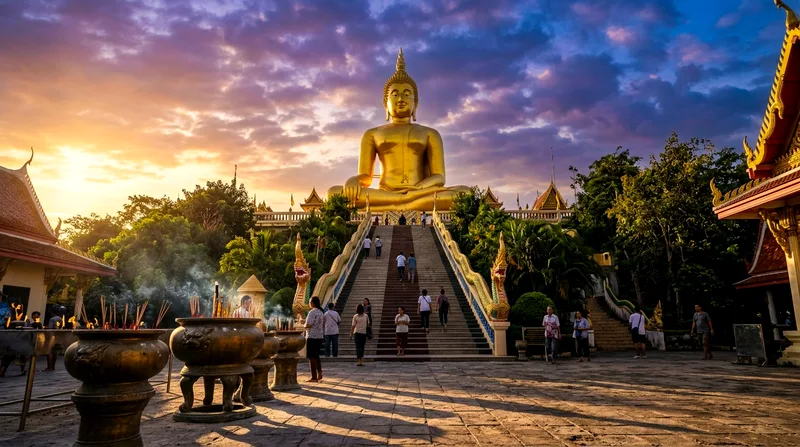
Explore Ko Samui's best temples and cultural tours. Compare guided options, learn what to expect, and book your temple tour with confidence.
A Ko Samui temples tour isn't for everyone, and it helps to be honest about that upfront. If your whole trip is built around diving at Koh Tao or beach-hopping around Koh Phangan, carving out half a day for temples might feel like a detour. But if you want some cultural texture between beach days — and most people do, even if they won't admit it before they arrive — this is one of the easier cultural add-ons in the Gulf of Thailand region, far easier to arrange than, say, a temple circuit out of Pattaya, where the sites are more scattered and less photogenic.
The island's temples are compact and clustered, mostly reachable within an hour's drive of each other, which makes Ko Samui genuinely efficient for this kind of outing compared to somewhere like Krabi, where cultural sites are secondary to the limestone cliffs and the logistics take longer. You don't need a full day to feel like you've seen something real here — though a full day lets you see more than the obvious two stops.
Solo travelers tend to get the most out of these tours because they can move at their own pace — lingering at Wat Plai Laem's carvings for twenty minutes without anyone tapping a foot. Small-group or private tours suit solo visitors best, since joining a large coach group often means rigid timing: fifteen minutes at the Big Buddha, back on the bus. If photography or genuine interest in Thai Buddhist architecture is the draw, book a tour that explicitly allows flexible time at each stop rather than one marketed purely as a "sightseeing tour" with a packed itinerary.
Families with children generally do fine on half-day temple tours, especially ones that pair a temple stop with a market or viewpoint — kids get bored fast inside temple grounds, so breaking up the day matters more than it does for solo travelers. Wat Phra Yai works well for families because the Big Buddha itself is visually impressive enough to hold a child's attention, and there are food stalls nearby. Avoid cramming in four or five temples with younger kids; two well-chosen stops beat a rushed five-temple circuit every time.
Ko Samui's temples spread across the island in a way that rewards a bit of route planning. Most tours cluster stops by geography rather than importance, which is the right approach — the alternative is hours of backtracking on Samui's ring road.
The north end, near Bophut and Maenam, holds some of the most visually distinct sites. Wat Phra Yai — home of the 12-metre Big Buddha statue — sits on its own small island connected by a causeway near Bang Rak, and it's the single most-visited religious site on Samui, usually free to enter with a small optional donation. Right next to it, Wat Plai Laem stands out for its elaborate multi-armed deity statue and the giant laughing Buddha figure that draws as many photographers as pilgrims. Further along, the Chinese Temple of Maenam adds a different architectural flavor entirely — bright red and gold, built in a Chinese rather than Thai Buddhist style, reflecting the island's mixed heritage. These three can realistically be covered in two to three hours if you're not lingering.
South and inland, the pace slows down and the crowds thin out. Khao Hua Jook, a hilltop temple near Lamai, requires a short climb but rewards with island views that most northern temples don't offer. The so-called Lady Monk Temple (Wat Khunaram), known for its mummified monk displayed in a glass case, draws a more curious-than-devotional crowd — it's unusual, slightly unsettling to some visitors, and worth the detour if you're already heading toward Lamai or Hua Thanon. These southern sites rarely appear on quick half-day itineraries, which is exactly why a full-day tour is worth considering if you want to avoid the exact same photos everyone else posts from Wat Phra Yai.
Tours fall into three broad categories, and picking the right one matters more than picking the right company.
Half-day tours suit a quick cultural add-on, while full-day and private tours suit travelers who want to see beyond the Big Buddha.
Ko Samui temple tour types compared by duration, group size, and inclusions
| Tour Type | Typical Duration | Group Size | Typical Inclusions | Best For |
|---|---|---|---|---|
| Half-day guided | 3-4 hours | Shared van, 8-15 people | Hotel pickup, 2-3 temple stops | Quick cultural add-on, tight schedules |
| Full-day cultural | 6-8 hours | Shared van, 8-15 people | Pickup, lunch, 4-6 stops, market or viewpoint | Couples, seniors, families wanting one full day |
| Private tour | Flexible, 4-8 hours | 1-6 people (own group) | Custom route, driver-guide, flexible timing | Travelers with mobility needs, photographers |
| Small-group tour | 4-6 hours | 4-8 people | Shared costs, moderate flexibility | Solo travelers, couples on a budget |
Typical figures based on common tour structures; exact inclusions and durations vary by provider, so check current listings before booking.
These typically run three to four hours and cover two to three northern temples — almost always Wat Phra Yai and Wat Plai Laem, sometimes with a viewpoint stop. They suit travelers who want the core cultural experience without sacrificing a beach afternoon. Transport is usually by air-conditioned van with a driver-guide, hotel pickup included. The trade-off is depth: you get the photo stops but not much time for the quieter southern sites. Expect shared vehicles with other travelers, which keeps costs down but limits flexibility.
Full-day tours — generally six to eight hours — add the southern temples, sometimes a market visit, a waterfall, or a viewpoint like Secret Buddha Garden. These suit couples and senior travelers who want a complete cultural day without self-driving, and families who prefer one big outing over two smaller ones. Lunch is often included or built into a stop at a local restaurant. The downside is pacing: a long day in heat and humidity, with several stops requiring stairs or uneven ground, can be tiring for anyone with joint issues or young toddlers.
Private tours cost more per person but offer the most control — custom routes, flexible timing, and often a driver who speaks better English and gives more context than a bus-tour guide reciting a script. Small-group tours (typically four to eight people) split the difference on price and flexibility. If you're traveling with elderly parents or anyone who tires easily, a private tour is worth the extra cost simply because you can skip a stop or cut the day short without disrupting a group.
Not all temple tours are built the same, even when they list the same two or three stops. Read past the headline itinerary.
Check whether hotel pickup is included — most are, but some require meeting at a central point, which is inconvenient if you're staying in Choeng Mon or Bophut away from the main strip. Group size matters more than people expect: a 20-person coach tour moves slower and gives less time per stop than an 8-person van. Look for free cancellation up to 24 hours before departure, which is standard on platforms like GetYourGuide and Expedia, and cross-check recent reviews on TripAdvisor before booking — a tour with no reviews in the last few months is a mild red flag, not necessarily a dealbreaker, but worth noting.
Shoulders and knees must be covered at every temple on this list — no exceptions at Wat Phra Yai or Wat Plai Laem, where staff turn away visitors in tank tops and shorts regularly. Bring a light scarf or sarong even if you're dressed modestly; it covers gaps fast. Shoes come off before entering most inner shrine areas, so slip-on sandals beat lace-up sneakers. Keep voices down near active prayer areas, and never climb on statues for a photo — it happens more than it should, and it's genuinely disrespectful rather than just a rule for rule's sake.
Morning departures beat afternoon ones almost every time — temples get hot and crowded with tour buses by midday, and the light for photos at Wat Plai Laem is far better before 10am. The dry season, roughly December through March, sees the highest demand, so booking a few days ahead is sensible rather than optional if you have a fixed date in mind. During the wetter months (October–November tends to be the rainiest), availability loosens up but outdoor stops like Khao Hua Jook become slippery and less pleasant.
Book through a recognized platform — GetYourGuide, Expedia, and Viator all list Ko Samui temple and cultural tours — and read the most recent reviews rather than the overall star rating, which can be skewed by older entries. Compare at least two or three listings before deciding; prices and inclusions vary more than you'd expect for what looks like the same itinerary. If you're also considering a Big Buddha tour combined with a Fisherman's Village or Nathon Market stop, check whether that's built into the same booking or sold separately — it often is, and bundling can save a return trip.
For travelers island-hopping, a Samui cultural tour pairs naturally with a boat trip to Ang Thong Marine Park or a day trip comparison against Koh Phangan's quieter temples — worth weighing if you have more than four or five days on the island. Compare current prices and reviews for Ko Samui temple tours before you book, since availability shifts with season and demand.
Wat Phra Yai (the Big Buddha) is the most visited and easiest to combine with other stops, but Wat Plai Laem next door offers more varied architecture and better photo opportunities. If you only have time for one, pair both — they're a five-minute walk apart.
Half-day tours run three to four hours and cover two or three temples. Full-day cultural tours run six to eight hours and add southern sites, a market, or a waterfall stop. Choose based on how much of your day you want to spend off the beach.
Cover your shoulders and knees — no tank tops, no shorts above the knee. Bring a sarong or light scarf as backup, wear slip-on shoes since you'll remove them at shrine entrances, and skip excessive jewelry or noise near prayer areas.
Book through platforms like GetYourGuide, Expedia, or Viator, comparing at least two listings for inclusions and group size. Check recent reviews on TripAdvisor, confirm hotel pickup is included, and look for free cancellation up to 24 hours before the tour.
Yes — Buddhist holidays like Songkran (mid-April) and Makha Bucha bring increased activity and crowds to temples like Wat Phra Yai. If you're visiting during one of these, expect larger local crowds, more vendors nearby, and book tours a few extra days ahead.
Visiting Secret Buddha Garden Ko Samui: compare 4×4 tours vs motorbike access, entry fees, opening hours, and what to expect at this jungle site.
10 min read · 19 Oct 2026
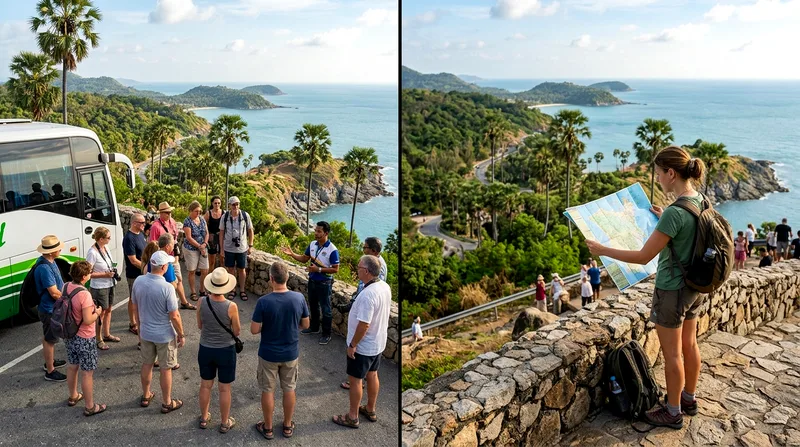
Ko Samui guided tour vs self-guided: compare cost, convenience, and cultural depth to pick the best way to see Big Buddha, Wat Plai Laem and more.
7 min read · 19 Oct 2026
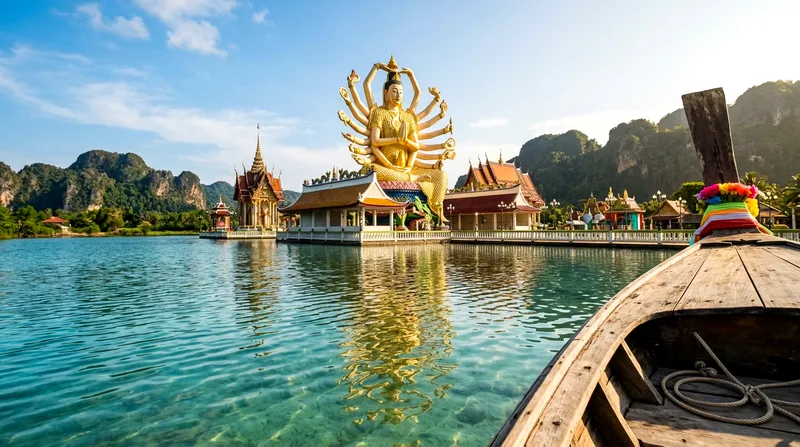
Visit Wat Plai Laem, Ko Samui's iconic 18-arm goddess temple. Learn entry fees, best times, and how to combine it with Big Buddha on a single tour.
10 min read · 19 Oct 2026
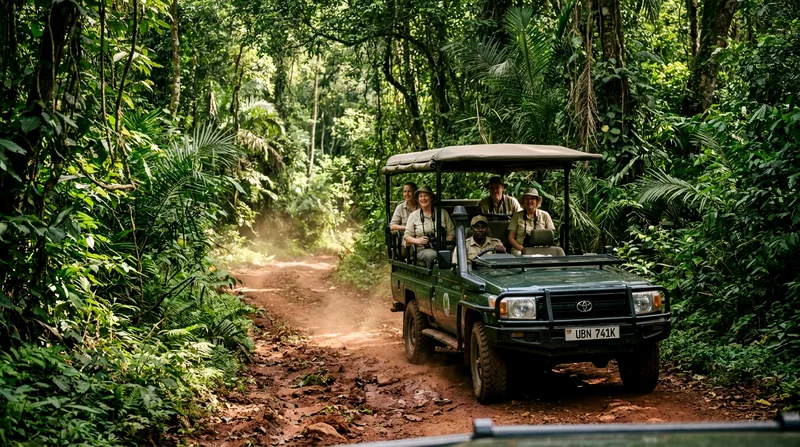
Compare group bus tours, private drivers & self-drive routes covering temples, waterfalls & viewpoints. Book the best Ko Samui sightseeing tour.
8 min read · 19 Oct 2026
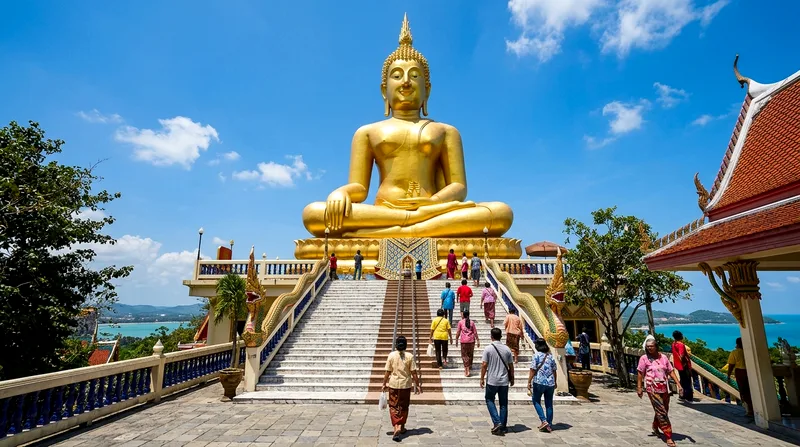
Visiting Big Buddha Ko Samui (Wat Phra Yai)? Get entrance fees, dress code, best visiting times, and guided tour options combining nearby sights.
8 min read · 19 Oct 2026