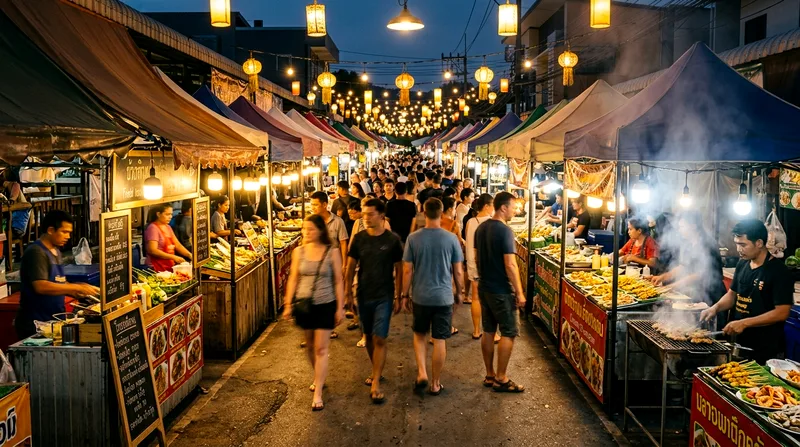
Ko Samui Night Markets: Where to Go & What to Eat
Explore Ko Samui's best night markets. Find opening hours, must-try street food, shopping, and local atmosphere at Lamai, Chaweng, and Fisherman's Village.
8 min read · 19 Oct 2026
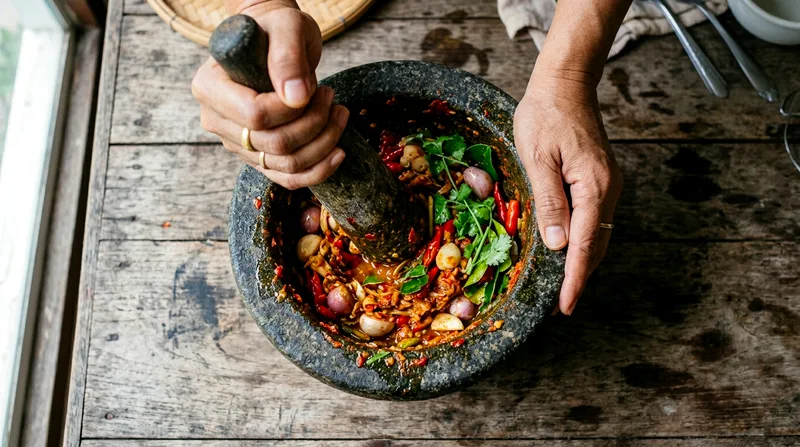
Tours & activities
Compare Ko Samui food tour types — market walks, cooking classes, street food tours. See who each suits and what to check before you book.
Ko Samui's food scene runs on two tracks — tourist-facing seafood restaurants along the beach roads, and the actual island diet found in morning markets and night stalls. A good Ko Samui food tour bridges the two: it takes you to where locals buy produce, explains what you're eating, and usually ends with you cooking at least one dish yourself. The island now has enough bookable options that choosing one is less about availability and more about matching format to your travel style and tolerance for spice, heat, and walking.
This guide breaks down the main categories — market walks, cooking classes, farm visits, and night market tours — so you can work out which one actually earns its price before you check listings on Viator, GetYourGuide, or Trip.com. None of these experiences require advance planning beyond a day or two, but the good ones do fill up during high season.
Not every food tour fits every traveler, and the mismatch is usually about pace, spice tolerance, or group size rather than the food itself. A family with a toddler struggles on a three-hour night walk through Chaweng; a solo food enthusiast gets bored in a resort cooking class aimed at beginners who've never held a wok. Matching the format to who you are matters more than which specific tour you pick.
If you're counting baht, skip the packaged tour entirely for your first taste of Samui street food — walk Chaweng Night Market or the Bophut Fisherman's Village Friday Walking Street on your own and order by pointing. You'll eat well for the cost of a few mains. Where a paid tour earns its keep for budget travelers is the cooking class: a half-day group class with market stop typically runs in the lower-to-mid price bracket compared to private options, and you walk away with recipes and a skill, not just a full stomach. Avoid the cheapest listed classes that skip the market altogether — they're usually pre-chopped ingredient kits dressed up as a cultural experience.
Families do best with daytime market walks or cooking classes rather than night market tours, since evening street scenes get crowded and kids tire fast. Look for operators who explicitly list family-friendly or kid-adjusted menus — milder curries, simpler dishes like pad thai or spring rolls that children can actually help assemble. Group bookings of 4 or more often qualify for private or semi-private sessions at a similar per-person rate to joining a stranger's group tour, which is worth asking about directly rather than assuming the group rate is fixed.
Solo travelers get the most value from small-group street food tours — they're sociable by design, usually capped at 8-12 people, and give you dinner plus company without the logistics of arranging your own crawl through unfamiliar sois. Food enthusiasts who already cook should push past the beginner cooking class and look for ones advertising market sourcing and multiple-course menus (five or six dishes rather than three), since the extra time and complexity is where the real learning happens. A one-dish class is a demo, not a class.
Private culinary experiences — sometimes booked through hotel concierges at properties like the Conrad Samui — run considerably higher than group tours but include a private chef, customized menus, and often a setting (beachfront, villa kitchen) that group tours can't match. These suit couples celebrating an occasion or travelers who simply dislike group tours on principle. The trade-off is you lose the market-crowd energy that makes street food tours interesting in the first place; private tours tend to feel more like a cooking lesson with a view than a cultural immersion.
Four categories cover nearly everything bookable on Samui right now. They overlap — most cooking classes include a market stop, most market walks include tastings — but the primary focus and time commitment differ enough to matter for planning your day.
Cooking classes with a genuine market component give the broadest experience for the time invested, while street food walks offer better value if you just want to eat widely.
Ko Samui food tour types compared: duration, group size, and price tier
| Tour Type | Typical Duration | Group Size | Price Tier | Best For |
|---|---|---|---|---|
| Market walk / street food tour | 2-4 hours | Small group (6-12) | Budget to mid-range | Solo travelers, first-time visitors |
| Cooking class with market stop | 4-6 hours | Small group or private | Mid-range | Couples, families, food enthusiasts |
| Farm-to-table / producer visit | 4-6 hours | Small group or private | Mid-range to higher | Repeat visitors, longer stays |
| Night market neighborhood walk | 2-3 hours | Small group (6-10) | Budget to mid-range | Couples, seniors, slower pace |
| Private chef / luxury experience | 3-5 hours | Private (1-6 people) | Premium | Special occasions, luxury seekers |
Typical ranges based on widely offered formats; confirm exact duration, group size, and inclusions before booking.
These run two to four hours, typically in the morning (for wet markets like Nathon's covered market or the White Market) or evening (for night market circuits). You walk with a guide, taste as you go, and get explanations of unfamiliar items — stink beans, salted fish, obscure tropical fruit. Expect six to ten tasting stops rather than a single sit-down meal. The upside is breadth and authenticity; the downside is you don't actually cook anything, and portion sizes per stop are small enough that you'll want a proper meal afterward if you've got a big appetite.
The most commonly booked format on Samui: a guide takes you through a local market first, explaining ingredients, then drives or walks you to a teaching kitchen to cook three to five dishes — typically a curry paste from scratch, a stir-fry, a soup like tom yum, and a dessert. These run four to six hours total and are the best single option if you want one tour that covers both culture and skill-building. The catch is that market-visit quality varies a lot between operators — some genuinely shop with you, others just walk you through for photos before using pre-bought ingredients back at the kitchen. Read recent reviews on TripAdvisor specifically for mentions of the market segment before booking.
Less common but worth seeking out if you're staying five-plus days: these tours visit coconut farms, fruit orchards, or small producers (fish sauce, palm sugar) in Samui's interior, usually combined with a meal using what you've just seen produced. They run half a day and suit travelers who've already done a market tour and want to see where ingredients originate before they reach a stall. They're not ideal as a first food experience on the island — the educational value lands better once you already understand the dishes being made from these ingredients.
Distinct from generic street food tours, these focus on one neighborhood — Fisherman's Village in Bophut, or the Chaweng strip — and go deeper into that area's specific vendors, including some a solo visitor would likely walk past. They run two to three hours, often finish with a seafood dinner by the water in Bophut, and suit couples or senior travelers who want a slower, more social pace than a multi-stop crawl. The limitation is geographic — you're not seeing the island's food variety, just one pocket of it well.
Listings on Viator, GetYourGuide, and Trip.com for Samui food experiences look similar at a glance — similar stock photos, similar bullet points — so the differences that actually matter are buried in the fine print. Read past the headline description before you commit.
Check exactly what "included" means: some cooking classes list "market visit" but it's a 10-minute drive-by, not real shopping time. Group size matters more than most people assume — a class capped at 8 feels like a class; one with 20 feels like a demonstration you watch from the back. Look for free cancellation up to 24 hours out, which most reputable listings offer; anything requiring non-refundable prepayment with no flexibility is a yellow flag, especially during rainy season when tours occasionally get rescheduled due to weather.
Confirm whether hotel pickup is included — Samui's layout means a tour based in Nathon is a real trek if you're staying in Chaweng or Lamai, and taxi costs add up fast if pickup isn't covered. On dietary restrictions: most established cooking classes can accommodate vegetarian requests with advance notice, and many can do gluten-free substitutions for soy sauce and noodles. Shellfish allergies are trickier on street food tours specifically, since stalls share woks and prep surfaces — flag this directly with the operator before booking rather than assuming cross-contamination risk is low.
Timing a Ko Samui food tour is less about the calendar month and more about day-of-week and time-of-day logistics, though season does affect a few things worth planning around.
High season (December through March) sees cooking classes and popular night market walks booking out a few days ahead, particularly ones with small group caps — book 3-5 days before your preferred date if traveling then. Rainy season, roughly October through December, doesn't cancel most tours but can disrupt outdoor market stops; confirm whether there's a covered alternative. Avoid booking a Monday night market tour in Bophut specifically — the Fisherman's Village Walking Street market runs Friday evenings, so a tour built around it won't operate midweek, and generic operators sometimes list it without checking the schedule. Always cross-check the specific market's operating day against the tour date before paying.
Before booking any Ko Samui food tour, cooking class, or culinary experience, run through a short mental checklist: does the market visit involve actual shopping or just walking through? Is the group size capped, and at what number? What's the cancellation window? Is hotel pickup included or an extra cost? Can the operator genuinely handle your dietary restriction, or are they just saying yes to close the sale? Compare at least two listings for the same tour type on different platforms — Viator and GetYourGuide often list the same operator at slightly different prices, and reading reviews across both gives a fuller picture than relying on one platform's curated reviews alone. Then compare current prices and availability for Ko Samui cooking classes and food tours before you book, since schedules shift with season and demand.
Most include a guide, tastings or a cooking session, and sometimes hotel pickup — but exact inclusions vary widely. Street food and market walks typically include 6-10 tasting stops and bottled water; cooking classes usually include a market visit, all ingredients, a printed recipe booklet, and the meal you cook. Always check the listing's inclusion list rather than assuming, since pickup and drinks are often charged separately.
Book through platforms like Viator, GetYourGuide, or Trip.com, or directly through your hotel's concierge if staying somewhere like the Conrad Samui. Compare at least two or three listings, read recent reviews focused on the market-visit quality, and book 2-5 days ahead during high season (December-March) when small-group classes fill up faster.
Vegetarian and gluten-free requests are generally easy to accommodate with 24 hours' notice, especially on cooking classes where dishes are made to order. Shellfish allergies are harder to guarantee on street food tours since stalls share cooking surfaces — message the operator directly before booking rather than assuming it's handled.
Tours run year-round, but December through March (dry, cooler season) offers the most comfortable walking conditions for outdoor market tours. Rainy season (October-December) doesn't typically cancel tours but can affect outdoor stops — confirm indoor alternatives when booking during that window.
Prices vary by group size and inclusions — street food and market walks sit at the budget end, cooking classes with market components fall into the mid-range, and private chef or luxury experiences cost noticeably more. Exact prices shift by season and operator, so check current listings and reviews on Viator or GetYourGuide before booking rather than relying on a fixed figure.
Explore Ko Samui's best night markets. Find opening hours, must-try street food, shopping, and local atmosphere at Lamai, Chaweng, and Fisherman's Village.
8 min read · 19 Oct 2026
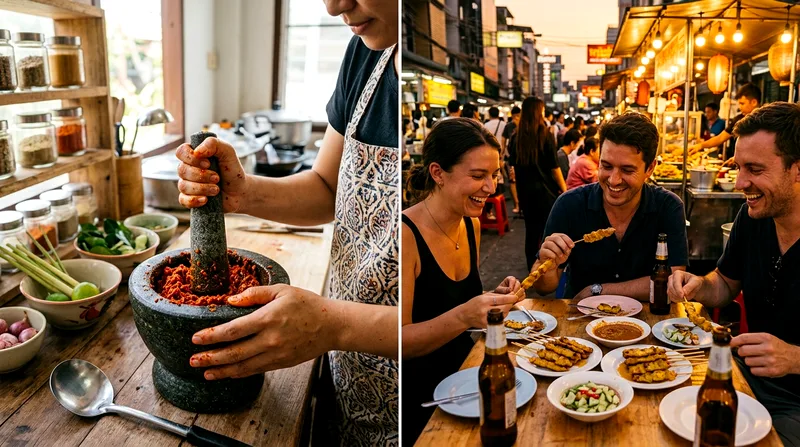
Compare Ko Samui cooking classes and food tours — cost, time, hands-on learning, and which suits couples, families, and solo travelers best.
9 min read · 19 Oct 2026
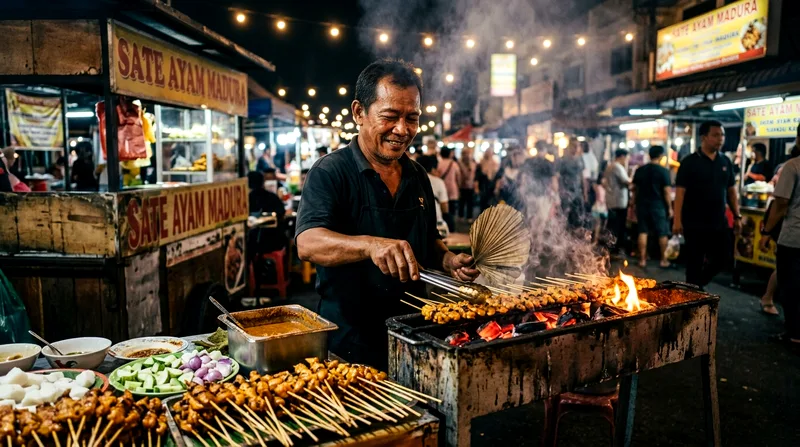
Explore Ko Samui's best street food tours. Compare guided evening walks, night markets & self-guided routes. Booking tips, dietary options & what's included.
9 min read · 19 Oct 2026
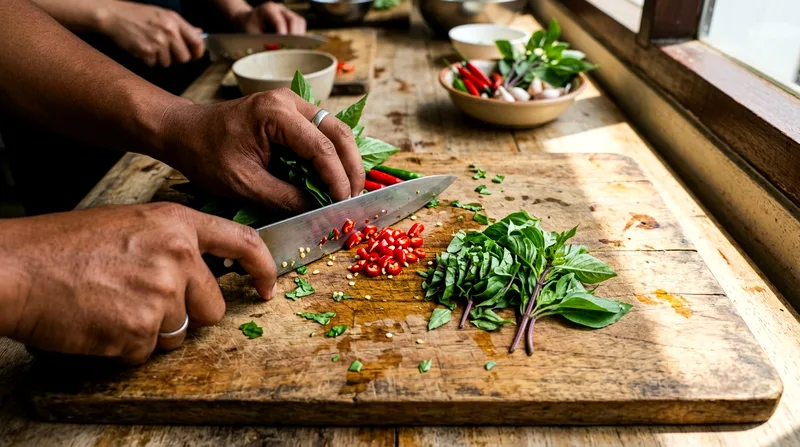
Compare top Ko Samui cooking schools by price, menu, class size & market visits. Book authentic Thai cooking classes with expert instructors today.
9 min read · 19 Oct 2026