Compare Ko Samui cooking classes and food tours — cost, time, hands-on learning, and which suits couples, families, and solo travelers best.
Quick Comparison: Cooking Class vs Food Tour
If you're trying to decide between a Ko Samui cooking class vs food tour, the short answer is this: a cooking class teaches you to make Thai food, and a food tour takes you around to eat it. That sounds obvious, but the practical differences — time commitment, physical effort, how much you interact with locals, and what you walk away with — matter more than most people realize before booking.
Both experiences use Thai cuisine as the draw, and both typically include hotel pickup services, which removes one of Samui's biggest friction points: getting around an island with no real public transport system. Beyond that overlap, they diverge fast. A cooking class — something like what Island Organic Cooking School or Smiley Cook run — puts you at a stove for three to four hours. A food tour moves you through a market or several street-food stops over two to three hours, mostly on foot, sampling rather than cooking.
Neither is inherently more "authentic." A good food tour guide who knows Big Buddha Market can tell you more about regional Thai cooking history in 20 minutes than a rushed class demo ever will. A good cooking class, on the other hand, gives you something a food tour never can: muscle memory. You'll remember how to balance fish sauce, palm sugar, and lime because your hands did it, not because someone told you.
A cooking class demands more time and effort but teaches a transferable skill, while a food tour is faster, lighter, and better for sampling variety.
Ko Samui cooking class vs food tour: key differences at a glance
| Experience | Typical Duration | Price Range (per person) | Physical Effort | Best For | Hotel Pickup |
|---|---|---|---|---|---|
| Cooking Class | 3-4 hours | Moderate (mid-range) | Active — standing, chopping, cooking | Hands-on learners, couples, foodies wanting skills | Usually included |
| Food Tour | 2-3 hours | Lower to moderate | Light — mostly walking | Groups, families, solo travelers wanting variety | Often included, confirm when booking |
| Market-Only Visit | 1-1.5 hours | Low | Light — browsing | Quick add-on, budget travelers | Rarely included |
| Private Cooking Class | 3-4 hours | Higher (premium) | Active | Couples, special occasions, dietary restrictions | Usually included |
Figures are typical ranges seen across Ko Samui operators; always check current prices and inclusions when booking.
What you do in each
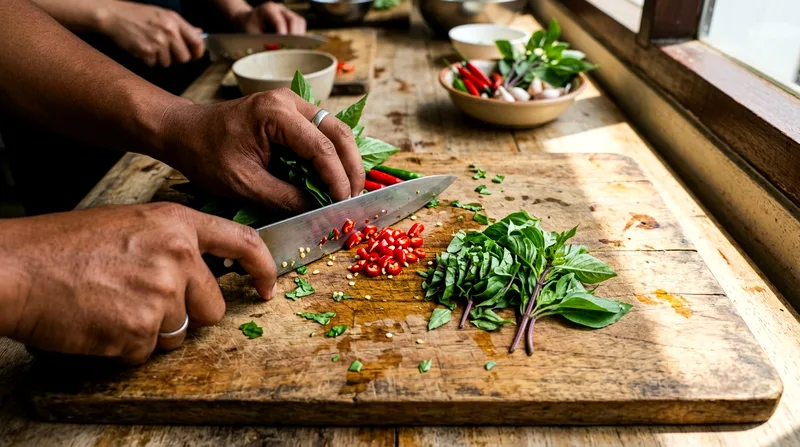
In a cooking class, expect a market visit (sometimes optional, sometimes built in), a chef demonstration, then hands-on cooking of three to five dishes — commonly a curry paste from scratch, pad thai, tom yum, and a dessert like mango sticky rice. You'll chop, pound, stir-fry, and plate your own food, usually in groups of 2-12 people sharing stations.
A food tour is lower effort and higher mileage. You'll walk between stalls or small restaurants, sample 8-15 dishes or snacks in small portions, and listen to a guide explain ingredients, vendors, or local eating customs. There's no cooking involved — you're a diner, not a cook. Some tours stop at a local chef's home kitchen for one live demo, which is the closest overlap with a class.
What you take home
Cooking classes almost always send you off with a printed or digital recipe booklet, and a lot of the better ones throw in a small apron or certificate — minor, but a nice souvenir. More importantly, you take home technique: how to get curry paste smooth without a blender, how to time noodles so they don't clump.
Food tours give you something different — a mental map of where to eat for the rest of your trip, plus the kind of local context that makes the remaining days on Samui feel less like a resort stay and more like you actually understand what's on your plate. If you're island-hopping afterward to Koh Phangan or Krabi, that knowledge travels better than a recipe card.
Head-to-Head: Time, Cost, and Effort
Time and money are where most people actually make this decision, so let's be blunt about both.
Duration and scheduling
A standard Ko Samui cooking class runs 3-4 hours, often scheduled for morning (9am-1pm) or afternoon/evening (4pm-8pm) slots, which conveniently book around beach time. Food tours tend to run shorter — 2-3 hours — and are frequently scheduled in the evening to catch night markets, or early morning to catch fresh produce markets before the heat sets in.
If your Samui itinerary is already packed with a Angthong Marine Park day trip or a Big Buddha temple stop, the food tour's shorter window is easier to slot in without reshuffling your whole day. A 4-hour cooking class, by contrast, basically eats your morning or evening — know that going in.
Price range and value
Cooking classes generally sit in the mid-range bracket per person, reflecting ingredient costs, equipment, and the instructor time needed for hands-on groups. Food tours are usually priced a bit lower per person since they involve sampling portions rather than full ingredient sets — though a tour with many stops and generous tastings can close that gap.
Private cooking classes cost more, but make sense for couples wanting a tailored, quieter experience, or for travelers with allergies who need closer control over what goes into the pot. Compare listings on GetYourGuide, Viator, or TripAdvisor before booking — prices and inclusions (market visit, number of dishes, recipe booklet) vary enough between operators that it's worth five minutes of comparison rather than booking the first result.
Learning Value and Hands-On Experience
This is the section where the two experiences stop competing and start serving genuinely different goals.
Skill-building and retention
A hands-on cooking class in Ko Samui works because you repeat each technique yourself — pounding a curry paste in a mortar, judging wok heat by sound, balancing sour-salty-sweet by taste rather than measurement. That repetition is what sticks. Months later, you're far more likely to recreate a green curry at home after a class than after watching a vendor make it once on a tour.
Food tours offer almost no retained skill. You'll remember flavors and maybe a vendor's name, but you won't remember technique, because you never touched the ingredients. If "I want to actually cook Thai food when I get home" is your goal, the class wins outright — there's no real debate here.
Cultural immersion depth
Food tours often win on breadth of cultural context. A guide walking you through a local market can explain why certain herbs are used, how vendors source ingredients daily, and how Thai eating customs differ from what's served in resort restaurants. You're seeing real commerce, not a staged kitchen.
Cooking classes offer depth instead of breadth — one local chef, one kitchen, often one regional style explained in detail. Some classes do include a market walk beforehand, which narrows this gap, but it's usually 20-30 minutes, not the full focus of the experience.
Crowds, Views, and Atmosphere
Atmosphere is underrated in this decision, and it's where personal travel style matters most.
Group size and intimacy
Cooking classes tend to cap groups smaller — often 2-12 people — because everyone needs their own station, ingredients, and chef attention. That makes for a more intimate, slightly quieter experience, good for couples or solo travelers who want to actually talk to the instructor.
Food tours can run larger groups, sometimes 8-15 people, since walking and sampling doesn't require individual workstations. Bigger groups mean less personal attention from the guide and more waiting around stalls, which can frustrate travelers who dislike queuing behind a dozen other people for the same skewer.
Market and scenic elements
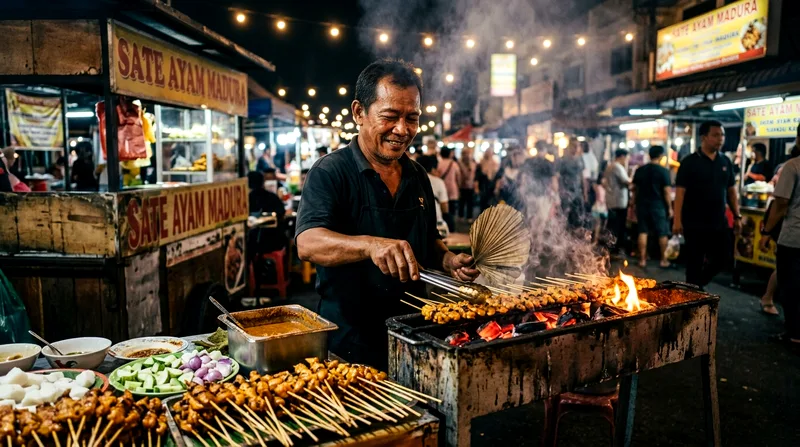
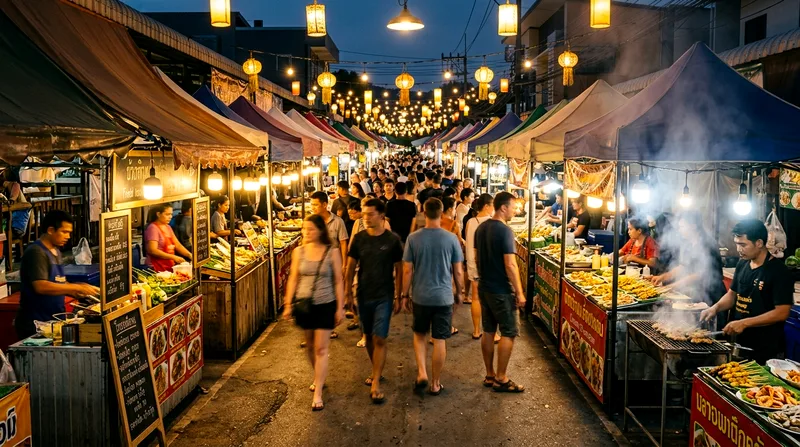
Food tours through Big Buddha Market or similar night markets deliver sensory variety — sizzling woks, grilled seafood smoke, stacked fruit stalls — that a single kitchen setting can't match. If you want photos and atmosphere over hands-on effort, the market setting usually wins.
Cooking classes, especially at places like Island Organic Cooking School, sometimes offer garden or farm settings with tropical surroundings, which is pleasant but static compared to a moving market tour. Neither beats a proper Samui beach sunset, but that's not really the point of either booking.
Who Should Book Which Experience
Matching the experience to the traveler matters more than the experience itself.
Best for couples
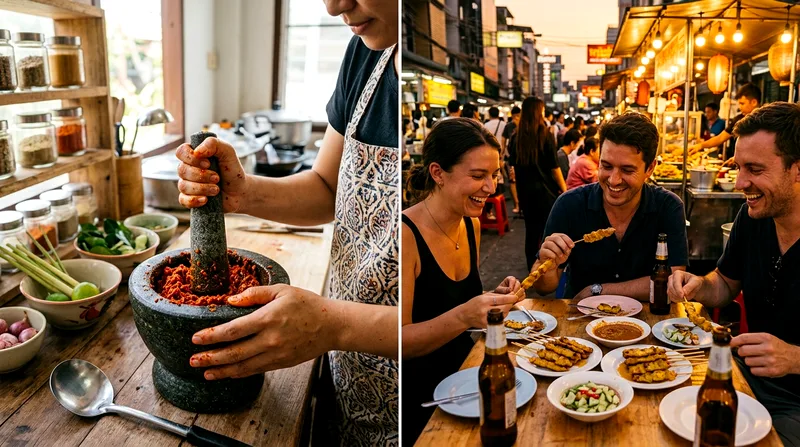
Couples who enjoy cooking together or want a shared activity beyond lying on the beach should lean toward a private or small-group cooking class — it's genuinely more fun to pound curry paste side by side than to stand in a market queue. For couples who'd rather talk, eat, and wander with minimal effort, an evening food tour through a night market offers a nice low-key date-night alternative, especially after a day trip to Koh Tao or a boat tour.
Best for families
Families with kids aged roughly 8 and up generally do better with a cooking class — children tend to enjoy the hands-on chopping and rolling (spring rolls are a reliable favorite), and a fixed kitchen setting is easier to manage than walking a crowded market with younger kids. Food tours work better for families with teenagers who can handle a few hours of walking and want variety rather than structure. Either way, confirm in advance whether the operator accommodates picky eaters or spice sensitivity — most will adjust chili levels on request.
Final Verdict: Making Your Choice
If you want one clean rule: book a cooking class when you want a skill and a quieter, hands-on afternoon; book a food tour when you want variety, movement, and local storytelling without the cleanup. Compared to a Phuket food tour — often larger and more commercialized — or a Hua Hin cooking class, which tends to focus more on seafood, Samui's offerings are generally smaller-scale and more personal, benefiting from the island's slower pace.
Don't book a 4-hour cooking class on a day you're also doing Angthong Marine Park or a long Koh Phangan ferry trip — you'll be too tired to enjoy either. And don't book a food tour expecting to learn to cook; that's a different product dressed in similar marketing language. Compare current cooking classes and food tours before you book, since inclusions and group sizes shift between operators even on the same island.
Frequently asked questions
What is the main difference between a cooking class and food tour in Ko Samui?
A cooking class is hands-on — you prepare and cook 3-5 Thai dishes yourself under a local chef's guidance. A food tour is passive — you walk between market stalls or eateries sampling dishes a guide selects, without cooking anything yourself.
How long do cooking classes and food tours typically last?
Cooking classes typically run 3-4 hours, including a demo and hands-on cooking of several dishes. Food tours usually run shorter, around 2-3 hours, covering multiple market or street-food stops on foot.
Are cooking classes and food tours suitable for families with children?
Both can work. Cooking classes suit kids around 8 and older who enjoy hands-on tasks like rolling spring rolls. Food tours suit families with teens who can handle a few hours of walking; younger children may tire quickly on a market-based tour.
Which experience offers better value for money?
It depends on your goal. Cooking classes cost more per person but include ingredients, instruction, and a recipe to take home. Food tours cost somewhat less and deliver more variety per baht if your priority is tasting many dishes rather than learning technique.
Do both activities include hotel pickup and transportation?
Most Ko Samui cooking classes and food tours include hotel pickup as standard, since the island lacks reliable public transport. Always confirm pickup inclusion and pickup zones when booking, as some operators exclude outlying areas like Choeng Mon or Lipa Noi.