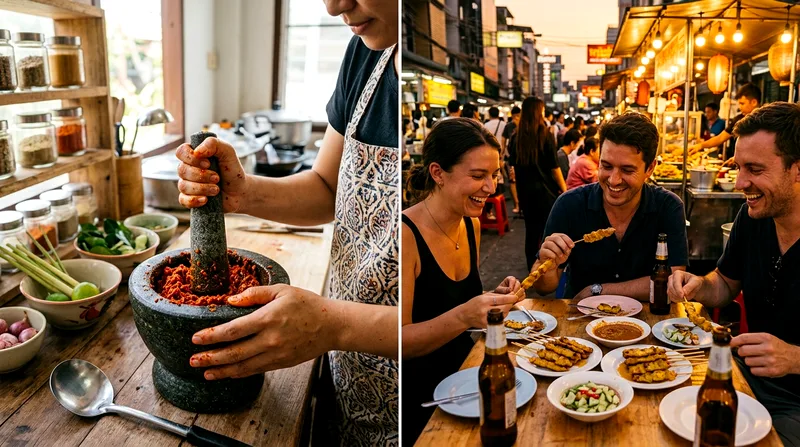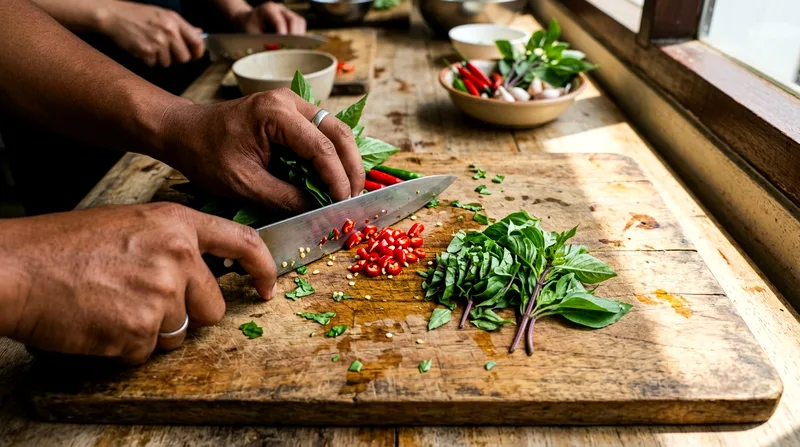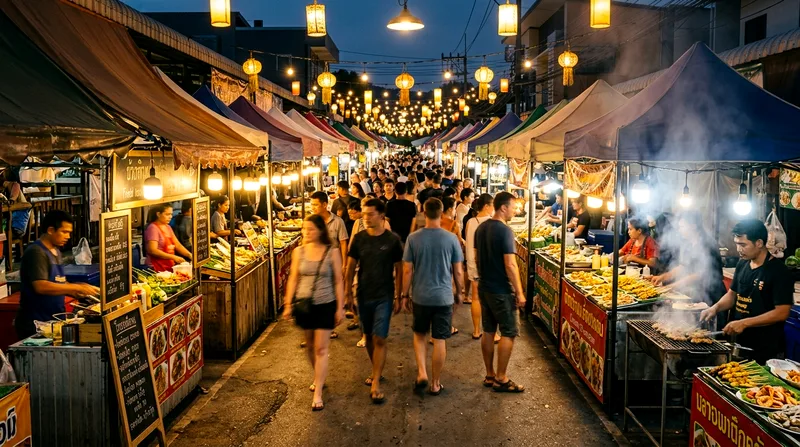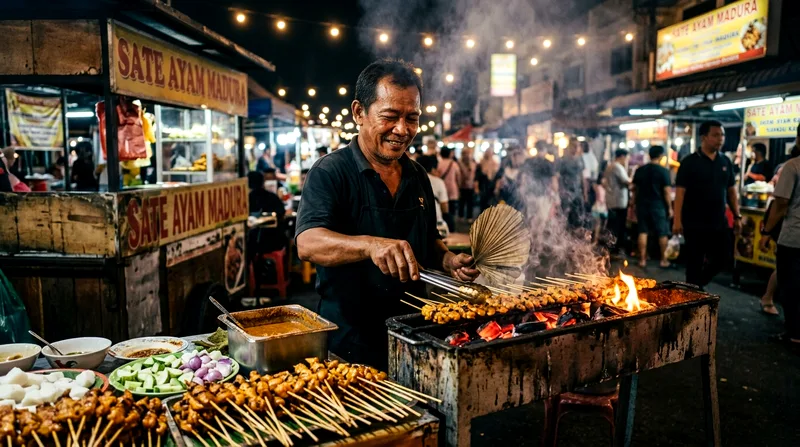
Explore Ko Samui's best street food tours. Compare guided evening walks, night markets & self-guided routes. Booking tips, dietary options & what's included.
Who Each Tour Type Suits Best
A Ko Samui street food tour isn't one thing — it's at least two distinct products wearing the same marketing language. Guided evening tours walk you through a handful of stops with a local host explaining what you're eating and why; self-guided visits to the island's night markets give you the same food for less money, minus the narration. Picking between them comes down to how much you already know about Thai food and how much you value your evening being planned for you.
If this is your first trip to Thailand, or you're traveling with people who get nervous about unfamiliar food stalls, the guided option removes nearly all the friction. You're not standing in front of a cart wondering if the sauce has fish paste or peanuts, and you're not guessing whether a particular vendor is safe or just popular with tourists who don't know better. The trade-off is cost and schedule — you're locked into a set time and a fixed group pace, which doesn't suit everyone.
Budget travelers and people who've already spent time in Vietnam, Malaysia, or elsewhere in Thailand often find guided tours redundant. If you can read a menu photo, point, and ask "pet mai?" (is it spicy?), you probably don't need someone walking you to each stall. Chaweng Night Bazaar and Lamai Night Market are both easy to navigate solo, with enough English signage and card payment options now that the guesswork is minimal.
First-time visitors and cultural explorers
For visitors who want context — why mango sticky rice is a dessert, not a side dish, or what makes Samui's seafood different from mainland Thai cooking — a guided walk pays for itself in information alone. Operators listed on platforms like GetYourGuide or Viator typically build routes around five to eight tastings, often starting in Fisherman's Village or around Nathon, where the food reflects the island's fishing community history rather than just tourist-adapted dishes. Expect the guide to explain ingredients, point out what's seasonal, and flag which stalls have been run by the same family for decades. That's the value add you're paying for, not just the food itself.
Budget travelers and independent foodies
If you've done a few trips through Southeast Asia and know your pad kra pao from your pad see ew, a self-guided night market crawl will likely serve you better. You control the pace, skip stalls that don't interest you, and can return to a favorite vendor twice without a group waiting on you. The downside is real: without local knowledge, it's easy to default to the same three or four tourist-friendly dishes every market offers, missing the more interesting regional specialties that a guide would point out by name.
Guided Evening Food Tours vs Self-Guided Routes
The practical differences between these two formats go beyond just having someone walk with you. Guided tours, the kind run by companies like A Chef's Tour or smaller local operators listed on TripAdvisor, are built around a curated route — typically four to six stops across two and a half to three hours, with tastings included in the upfront price. You're not negotiating each purchase; the guide has often already arranged quantities and sometimes payment with vendors in advance. That matters in markets like Lamai, where the best stalls can sell out of their signature dish well before closing.
Self-guided exploration is simply you, a market map or a saved list of stalls, and your own cash or QR code payment app. Nathon's night market and the weekly markets in smaller areas run on a drop-in basis with no reservation needed. You pay per dish, usually in small amounts, and can eat as much or as little as you like. It's dramatically cheaper than a guided tour per calorie consumed, but you lose the behind-the-counter context — no one's explaining why this particular grilled pork skewer recipe differs from the one two stalls down.
Guided tours trade cost and flexibility for curation and local context, while self-guided night markets offer the opposite trade-off.
Ko Samui street food tour formats compared: duration, group size and flexibility
| Tour Format | Typical Duration | Group Size | What's Included | Dietary Flexibility |
|---|---|---|---|---|
| Guided evening food tour | 2.5–3.5 hours | 6–12 people | Multiple tastings, guide, sometimes transport | Moderate — request in advance |
| Small-group chef-led tour | 3–4 hours | 4–8 people | Tastings, cooking context, drinks | High — easier to customize |
| Self-guided night market walk | Open-ended | Solo or own group | Pay-per-dish, no narration | Full control |
| Fisherman's Village evening walk | 1.5–2.5 hours | Varies by booking | Tastings plus market browsing | Moderate |
Durations and group sizes are typical ranges; confirm specifics and current inclusions before booking.
Professional guide experience and inclusions
A properly run guided tour should include unlimited or generous tastings at each stop, bottled water, and sometimes a non-alcoholic drink pairing suggestion. Group sizes tend to run small — six to twelve people is typical for Samui operators, which keeps the pace manageable and lets the guide actually answer questions rather than just herding people. Watch out for listings that are vague about how many tastings are "included" versus "available to purchase separately" — that's the biggest gap between a good tour and a mediocre one, and it's usually buried in the fine print rather than the headline description.
Night market independence and flexibility
Going it alone means total flexibility on timing — markets like Chaweng Night Bazaar run most evenings, so you're not locked into one specific night or time slot the way a scheduled tour often requires. You can also mix food with the shopping stalls that run alongside most of these markets, which guided tours rarely build time for. The flip side: there's no safety net if you order something that turns out to be inedible to your palate, and no one translating an unfamiliar menu item before you commit.
What to Look for When Booking
Not all listings calling themselves a "Ko Samui street food tour" deliver the same experience, and the details that matter most are rarely in the headline photo. Before you book anything, read through at least three or four reviews that mention specifics — how many stops, how much food, whether the guide spoke fluent English, whether the route felt padded with shopping stops instead of eating. Reviews on TripAdvisor tend to be more detailed and critical than the star rating alone on booking platforms suggests.
Group size, duration and food samples
Smaller groups — under ten people — generally mean better access to the guide and less standing around waiting for everyone to finish a dish. Anything over fifteen starts to feel more like a walking queue than a food tour. On duration, anything under two hours is unlikely to cover more than three or four stops properly; anything over four hours risks fatigue, especially for families with young children or senior travelers not used to walking in humid evening heat. Ask specifically how many tastings are included — "sample-sized portions at six stalls" is a very different experience from "one full dish at two stalls."
Cancellation policy and booking platforms
Book through platforms with clear, published cancellation terms — GetYourGuide and Viator both typically offer free cancellation up to 24 hours before a tour, which matters on an island where weather and ferry delays can disrupt evening plans with little warning. Avoid listings with no visible cancellation policy or ones routed entirely through a messaging app with no platform backing — if something goes wrong, you'll have no recourse for a refund. Always check the listed meeting point too; some tours gather in Chaweng but operate the actual walk somewhere else entirely, which can confuse arrival timing.
Best Times to Book & Visit
Timing affects both availability and the quality of what you'll eat. Peak tourist months — December through February, and again around July and August — see guided tours fill up a week or more in advance, particularly smaller group options capped at eight or ten people. Book those at least five to seven days ahead if you have a fixed itinerary; last-minute slots do appear, but you'll have less choice over which evening and route.
Night markets themselves run on a weekly rhythm rather than daily in some locations — Lamai's night market, for instance, doesn't operate every single night, so check the current schedule before planning an evening around it specifically. Chaweng and Fisherman's Village tend to have more consistent evening activity, though Fisherman's Village is particularly known for its Friday walking street market, which adds vendors beyond the usual nightly setup.
Seasonal weather and tour availability
Ko Samui's wet season runs roughly October through December, with October and November often bringing the heaviest rain. Outdoor night markets and walking tours don't cancel for light rain, but a heavy downpour can shut down stalls early or thin out the vendor selection significantly. If you're visiting during this window, keep your evening plans flexible rather than booking a single fixed-night tour you can't move. The dry season, roughly January through September excluding the wettest months, gives more predictable evenings and fuller markets.
Dietary Restrictions & Special Preferences
Thai street food leans heavily on fish sauce, shrimp paste, and peanuts, which makes it trickier than it first appears for anyone with allergies or strict dietary rules. Self-guided exploration puts the burden entirely on you to ask vendors directly — a useful phrase is "mai sai nam pla" (no fish sauce), though not every stall will be able to accommodate the request on the spot since many dishes are pre-prepared in batches.
Vegetarian, vegan and allergy accommodations
Guided tours generally handle this better, but only if you tell the operator in advance — ideally at the time of booking, not on arrival. A good guide will have already identified vegetarian or vegan-friendly stalls along the route, or arranged substitute dishes. Vegan travelers should be aware that many seemingly plant-based Thai dishes still use fish sauce or shrimp paste as a base seasoning, so a dish labeled vegetarian by a stall owner isn't automatically vegan. For serious allergies — shellfish or peanuts in particular — it's worth messaging the tour operator directly before paying, since written allergy policies on listing pages are often thin or generic.
Frequently asked questions
What is included in a Ko Samui street food tour?
Most guided tours include a set number of tastings at four to eight stalls, a local guide, and often bottled water. Some add a drink pairing or small dessert stop. Transport between the island's resort areas and the tour start point is sometimes included, sometimes not — check the listing carefully, since this affects whether you need to arrange a taxi separately.
How long does a typical Ko Samui food tour last?
Guided evening food tours typically run two and a half to three and a half hours, covering a walkable route of several hundred meters to a kilometer or so. Self-guided night market visits have no fixed duration — most visitors spend sixty to ninety minutes browsing a single market like Chaweng Night Bazaar or Nathon.
Can I do a self-guided food tour in Ko Samui?
Yes, and it's straightforward if you're comfortable navigating with limited English signage at some stalls. Lamai Night Market, Chaweng Night Bazaar, and the Nathon area markets are all walkable without a guide, and most vendors now accept mobile payment apps alongside cash. The main risk is missing lesser-known stalls that a local guide would know to point out.
Are vegetarian and dietary-restricted options available?
Vegetarian options exist at most markets, though true vegan dishes require asking specifically since fish sauce and shrimp paste are common hidden ingredients. Guided tours handle allergies and restrictions more reliably if you notify the operator before the tour date, rather than mentioning it on arrival.
Where are the best night markets in Ko Samui?
Lamai Night Market, Chaweng Night Bazaar, and the markets around Nathon and Fisherman's Village are the four most consistently recommended. Fisherman's Village is particularly known for its Friday evening walking street, which draws a larger and more varied set of food vendors than its regular nightly setup.