Visiting Secret Buddha Garden Ko Samui: compare 4×4 tours vs motorbike access, entry fees, opening hours, and what to expect at this jungle site.
What Is Secret Buddha Garden
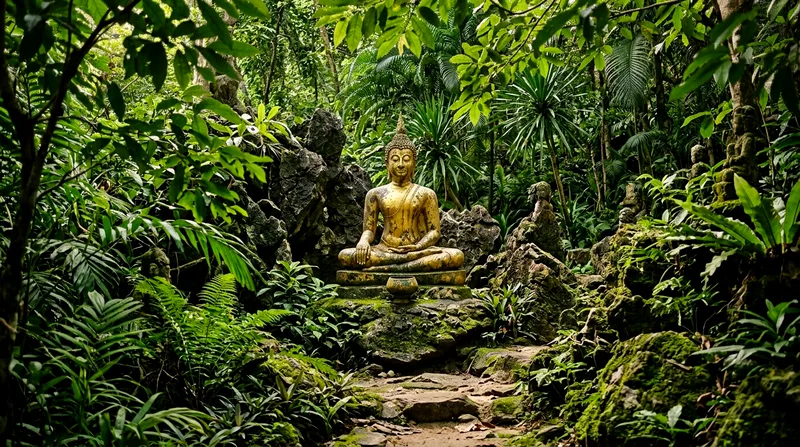
Secret Buddha Garden in Ko Samui is a hillside sculpture garden tucked into the island's interior, roughly 30 to 40 minutes by road from the main coastal towns. It's not a temple in the religious sense — there's no active worship hall, no monks in residence — but a privately created collection of Buddha statues, stone figures, and carved animals set among boulders, streams, and durian trees on the slopes of Pom Mountain. The effect is somewhere between a shrine and an eccentric outdoor sculpture museum, built over decades by one man's personal project rather than a temple committee.
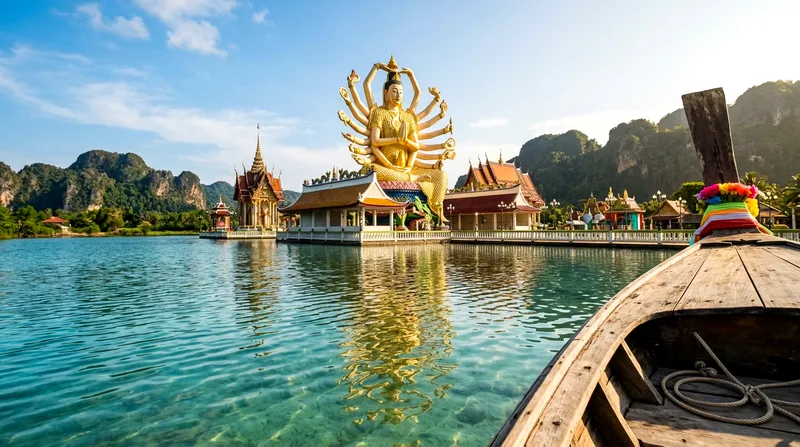
What makes it worth the drive isn't grandeur — it's scale and setting. You're walking through working fruit orchards and jungle terrain at elevation, with statues appearing almost incidentally among the trees rather than arranged on a manicured plaza. That's different from Samui's more polished temple stops like Wat Plai Laem or the Big Buddha Temple near Bophut, which are flatter, paved, and far easier to reach. If you want convenience, go to those instead. If you want something that feels like you found it rather than were delivered to it, Secret Buddha Garden does that better than almost anywhere else on the island.
Location and alternative names
You'll see this place listed under several names, which causes real booking confusion. "Secret Buddha Garden," "Magic Garden," and "Tarnim Magic Garden" all refer to the same site on Pom Mountain, in Ko Samui's mountainous interior near the village of Thurian. Tarnim was the nickname of the fruit farmer who built it starting in the 1970s, and Thai-language maps sometimes use "Tarnim" where English listings say "Secret" or "Magic." When searching on Google Maps or booking a tour, check the pin matches Pom Mountain, not a different garden near Na Muang — there is some overlap in marketing material between the two attractions since they sit along the same access road.
Why visit this underrated spot
The honest case for visiting: it's quiet, it's visually unusual, and it gets you off the beach-and-market loop that dominates most Samui itineraries. You won't find the crowds that cluster at the Big Buddha or Wat Plai Laem's photogenic mirror-tiled halls. The trade-off is accessibility — this isn't a drop-in stop on a tuk-tuk ride. You need to actively plan the trip, and that filtering effect is part of what keeps it uncrowded. If your Samui trip already includes a jungle or waterfall day, this slots in naturally; if you're purely a beach-and-pool traveler, it may not justify the logistics.
How to Get There: Access Options
There are exactly two realistic ways to reach Secret Buddha Garden: a guided 4×4 tour or self-drive, almost always by motorbike since the access road is too narrow and rough for most rental cars. There's no public transport option and no realistic walking route — the final stretch climbs steeply through unpaved jungle track for several kilometers. Taxis will take you to the base of the access road at most, and even that costs more than most drivers want to quote upfront, so agree a price before you get in.
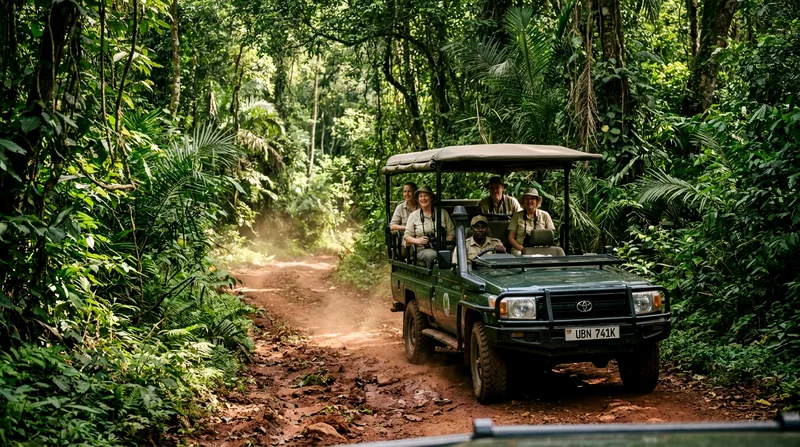
Which option you choose should come down to your comfort with rough roads and how much time you want to spend. A 4×4 tour removes the risk entirely and usually bundles in other stops — Na Muang waterfalls, a viewpoint, sometimes a local market — turning the trip into a half-day excursion rather than a single stop. Self-driving by motorbike is cheaper and faster if you're already confident on Samui's roads, but the final climb to the garden is genuinely demanding, with loose gravel, potholes, and sections steep enough that underpowered rental scooters struggle.
A guided 4×4 tour is the safer, more convenient way to reach Secret Buddha Garden, while self-drive motorbike access suits only confident, experienced riders.
Secret Buddha Garden Ko Samui: access options compared
| Access Method | Typical Cost | Time Needed | Difficulty | Best For |
|---|---|---|---|---|
| Guided 4×4 tour | Approx. 1,200–2,000 THB pp | Half day (4–5 hrs) | Easy | Families, seniors, first-timers |
| Self-drive motorbike | Rental approx. 200–300 THB/day + fuel | 2–3 hrs round trip | Challenging, steep unpaved sections | Experienced riders only |
| Taxi to base + walk | Negotiated fare, varies | 1.5–2 hrs | Moderate, steep uphill walk | Budget travelers willing to hike |
| Private car hire with driver | Approx. 1,500–2,500 THB for trip | Half day | Easy | Couples wanting flexibility |
Prices and durations are typical ranges; always confirm current rates and road conditions before booking.
Guided 4×4 tour experience
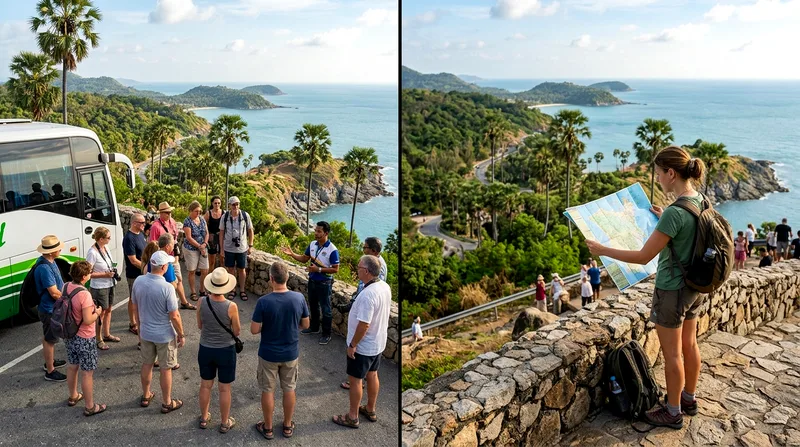
Most visitors book Secret Buddha Garden as part of a half-day or full-day 4×4 jungle tour, often combined with Na Muang Waterfall, a viewpoint stop, and sometimes an elephant sanctuary or coffee plantation visit. These tours are widely listed on platforms like Viator and reviewed on TripAdvisor, with typical half-day prices in the range of 1,200 to 2,000 THB per person depending on group size and inclusions — always check current prices when booking since fuel surcharges and group discounts shift this. Pickup is usually from your hotel in Chaweng, Lamai, or Bophut. The vehicle handles the steep unpaved sections that would be miserable or dangerous on a scooter, and a driver-guide means you're not navigating junctions that aren't signposted in English. This is the option to pick if you're traveling with kids, if you're a senior traveler, or if you simply don't want road risk on your holiday.
Self-drive motorbike access
Experienced riders can reach the garden independently, and it's a legitimately good way to see Pom Mountain's back roads if you're already comfortable with Samui traffic and unpaved surfaces. Rent a semi-automatic or manual bike with real ground clearance — a 125cc Honda Click or similar automatic scooter is underpowered for the final climb, especially after rain when the track turns slick. Go in daylight, carry your international driving permit, and wear real shoes, not sandals. The route is poorly signed, so download an offline map before you set out — phone signal drops out on parts of the mountain. This isn't the move for first-time riders or anyone who hasn't handled loose gravel on an incline before; Samui's hospital does see a steady stream of tourist motorbike injuries, and this particular road is a contributor.
Entry Fees and Opening Hours
Secret Buddha Garden charges a modest entry fee collected on-site, separate from whatever you pay for transport or a tour package. It's a low-key operation — think a small booth or honesty-style collection point, not a formal ticket counter with barriers and queues. Bring cash in small Thai baht denominations, since there's no card payment infrastructure this far up the mountain.
Ticket pricing and inclusions
Entry typically runs around 80 to 100 THB per person, paid directly at the garden regardless of how you arrived. If you've booked a 4×4 tour, check whether this entry fee is included in the tour price or payable separately on arrival — listings vary, and some operators bundle it while others list it as an "additional local fee." There are no tiered ticket types, no fast-track options, and no online pre-booking for entry itself — only the transport portion (the tour) is what you book in advance through platforms like Viator or local tour desks in Chaweng and Lamai.
Operational hours and seasons
The garden generally operates during daylight hours, roughly 8:00 am to 5:00 pm, with no evening access — there's no lighting on the access road or within the grounds, and descending the mountain track after dark is not something to attempt. It's open year-round, but the rainy season (roughly October to December on Samui) makes the unpaved approach road genuinely harder to drive or ride, with mud and runoff common. If you're visiting during these months, lean toward the 4×4 tour option rather than self-driving, and check locally whether the road is passable before setting out — short closures after heavy rain aren't unheard of.
What to Expect and Best Time
Once you arrive, plan on 45 minutes to an hour exploring. The site is a series of stone pathways and natural terrain winding past dozens of Buddha statues, mythical animal carvings, and smaller shrines, interspersed with a natural stream and small waterfall features that run stronger in wetter months. It's genuinely photogenic in late morning light, when sun filters through the canopy onto the statues' weathered stone surfaces — arrive before 10:30 am if you want shots without harsh midday glare or the handful of other tour groups that overlap around midday.
Footing is uneven throughout — expect tree roots, loose stones, and a few short, steep sections between clusters of statues. There's minimal shade infrastructure (no built shelters), so bring water and sun protection even though you're under tree cover for parts of the walk.
Suitability for families and seniors
Families with older kids — say eight and up — generally do fine here, especially via the 4×4 tour, which removes the risky part of the trip. Toddlers and stroller-bound children are a poor fit; there's no paved, flat loop, and carrying a child over the uneven stone paths for an hour gets tiring fast. Seniors with reasonable mobility can manage it, but anyone using a cane, walker, or with significant balance issues should think hard about the terrain before committing — there are no handrails or accessible paths. If mobility is a concern, Wat Plai Laem or the Big Buddha Temple, both flat and paved, are far more realistic alternatives on Samui.
Seasonal weather and accessibility
The dry season, roughly January through August with a brief lull around April's heat peak, is the most reliable window — firmer roads, lower humidity in the mornings, and clearer stream features without flash-flood risk. September through December brings the heaviest rain and the muddiest access road; it's not impossible to visit, but it's a worse experience and a genuinely riskier motorbike ride. If your trip falls in the wet months, book the 4×4 option rather than gambling on self-drive conditions.
Nearby Attractions and Add-Ons
Secret Buddha Garden sits close enough to several other interior attractions that almost nobody visits it in isolation — the driving time to get up the mountain makes it worth stacking with other stops.
Na Muang waterfalls and trails
Na Muang Waterfall 1 and Na Muang Waterfall 2 are the most common pairing, located on the same general access road toward Pom Mountain. Na Muang 1 is a short, flat 5-minute walk from the car park and has a swimmable pool at the base — good for families. Na Muang 2 requires a steeper 30 to 45-minute hike through jungle trail and is taller and more dramatic, but it's not stroller- or wheelchair-friendly and gets slippery in wet season. Most 4×4 tour itineraries include both waterfalls alongside the garden, which is the efficient way to see all three in one outing rather than arranging separate trips.
Combination itineraries
If you're staying in Lamai Beach, which sits closest to the mountain access road, a half-day loop covering Secret Buddha Garden, both Na Muang waterfalls, and a viewpoint stop is easily doable before lunch, leaving your afternoon free for the beach. Compare that to a full-day Samui jungle safari tour, which sometimes adds an elephant sanctuary visit or a coconut/rubber plantation stop — worth it if you want a complete inland day, but it's a longer commitment, often 6 to 7 hours total. Travelers based in Chaweng or Bophut add roughly 20 to 30 minutes of extra transfer time each way compared to Lamai-based visitors, which matters if you're trying to beat the midday tour-group crowds.
Frequently asked questions
How do I get to Secret Buddha Garden?
The two realistic options are a guided 4×4 tour, which picks you up from hotels in Chaweng, Lamai, or Bophut and handles the steep unpaved access road, or self-driving a motorbike with good ground clearance if you're an experienced rider. There's no public transport and taxis generally only go as far as the base of the access road.
What is the entrance fee for Secret Buddha Garden?
Entry is typically around 80 to 100 THB per person, paid in cash on-site. This is separate from any tour or transport cost — check whether your 4×4 tour package includes this fee or lists it as an additional local charge payable on arrival.
Is Secret Buddha Garden accessible by motorbike or only 4×4?
Both are possible, but motorbike access is only advisable for experienced riders comfortable with steep, unpaved, loose-gravel terrain. A 4×4 tour is the recommended and safer option, particularly during the rainy season (roughly October to December) when the road gets muddy and harder to navigate.
Is it suitable for families and seniors?
It works well for families with kids around eight and older, especially via a 4×4 tour that removes the road risk. It's a poor fit for toddlers, strollers, or seniors with significant mobility limitations, since the paths are uneven with no handrails or flat accessible loop.
What nearby attractions can I combine with this visit?
Na Muang Waterfall 1 and Na Muang Waterfall 2 sit along the same access road and are the standard pairing, usually included in 4×4 tour itineraries. Some full-day jungle tours also add an elephant sanctuary or plantation stop, turning it into a 6 to 7-hour inland day rather than a half-day trip.