Visiting Big Buddha Ko Samui (Wat Phra Yai)? Get entrance fees, dress code, best visiting times, and guided tour options combining nearby sights.
What Is Big Buddha Ko Samui?
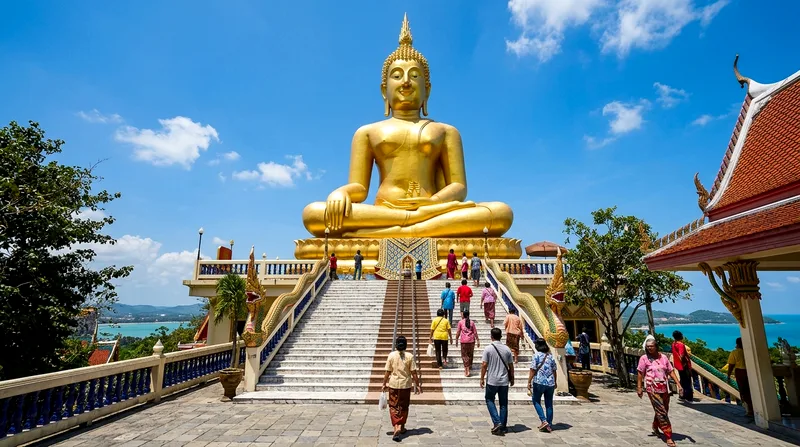
Big Buddha Ko Samui is the common name for Wat Phra Yai, a Buddhist temple built around a 12-meter golden statue of a seated Buddha. It's the single most photographed landmark on the island, and for once the reputation holds up — the statue is genuinely large, gold-leafed, and visible from boats and planes approaching Samui's northeast coast. If you've seen one photo of Ko Samui that isn't a beach, there's a decent chance it was this.
What surprises first-time visitors is how small the surrounding temple complex actually is. This isn't a sprawling monastic campus like you'd find in Chiang Mai. It's a compact platform with the statue, a handful of smaller shrine buildings, souvenir stalls, and a long staircase. You can see everything in 20 to 30 minutes, which is exactly why it works well as one stop on a longer day rather than a destination in itself.
Location and significance
The statue sits on Ko Phan, a tiny island connected to mainland Ko Samui by a short causeway, near the village of Bophut on the island's north coast. It's roughly 10-15 minutes by car from Chaweng and about 20-25 minutes from the airport, depending on traffic. For locals, Wat Phra Yai remains an active place of worship — you'll see Thai visitors making offerings, not just tourists taking photos — which gives it more genuine religious weight than some temples built primarily for visitors.
Physical features and history
The Buddha was constructed in 1972, making it older than most of Samui's tourist infrastructure — it predates the airport, the big resorts, even most of the paved roads. The statue depicts the Buddha in the Maravijaya posture (subduing temptation), seated and gilded, visible from a considerable distance out at sea. A steep staircase of roughly 50 steps, flanked by naga (serpent) balustrades, leads up to the base. At the top, you get a clean, elevated view back over Bophut Bay and the smaller boats moored near the causeway — reason enough to climb even if temple architecture isn't your thing.
How to Visit: Independent vs. Guided Tours
There's no real argument for booking a dedicated tour just to see Big Buddha — it's free, it's quick, and it's easy to reach on your own. The decision that actually matters is whether you drive yourself, hire a taxi, or fold it into a half-day tour that covers several north-coast sights at once.
Visiting Big Buddha independently is cheaper and more flexible, while a guided tour saves logistics by bundling it with other north-coast sights.
Big Buddha Ko Samui: independent visit vs. guided tour compared
| Option | Cost | Time Needed | Flexibility | Best For |
|---|---|---|---|---|
| Self-drive (car/scooter) | Free entry + fuel | 30-45 min | High | Independent travelers, couples |
| Taxi one-way | approx. 300-500 baht | 30-45 min | Medium | Solo travelers, short visits |
| Half-day combo tour | Varies, check current prices | 4-5 hours | Low | Families, first-timers, no rental |
| Full-day island tour | Varies, check current prices | 7-8 hours | Low | World travelers wanting multiple sites in one day |
Prices and tour inclusions vary by season and operator; check current rates before booking.
Self-guided visit by car or taxi
If you've rented a car or scooter, Big Buddha is one of the easiest attractions on Samui to find — it's just off Route 4171, clearly signed, with a free parking area a short walk from the temple entrance. Expect to pay nothing for parking at most lots near the site, though a few roadside operators charge 20-50 baht informally; this isn't official and you can usually find free spots closer to the causeway if you arrive early.
A taxi from Chaweng typically runs somewhere in the 300-500 baht range one-way, though Samui taxis don't use meters and prices are negotiated upfront — always agree the fare before getting in. Grab (the regional ride-hailing app) works in parts of Samui and can give you a fairer, fixed price, though availability near the temple is patchy. If you're staying in Bophut itself, it's close enough to reach by scooter in under 10 minutes, or even by bicycle if you don't mind the heat.
Organized tour options
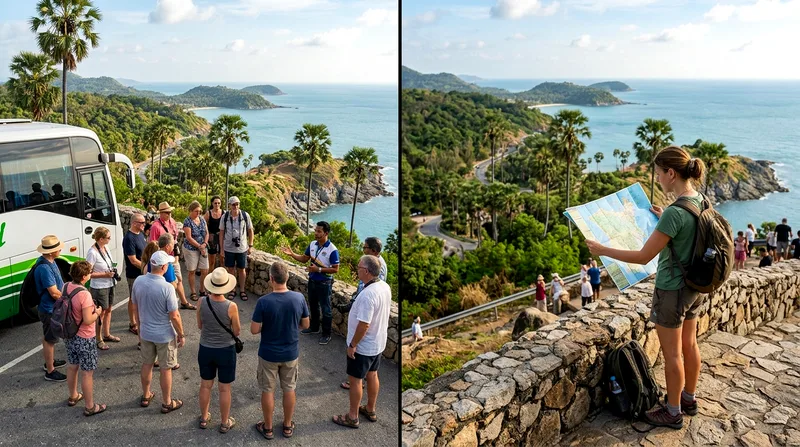
Big Buddha rarely appears as a standalone tour product — it's almost always bundled into half-day or full-day island tours alongside other temples, viewpoints, and sometimes the Fisherman's Village in Bophut. These are commonly sold through platforms like Klook or arranged via hotel tour desks, often in an air-conditioned minivan with 6-10 other travelers. The appeal is logistics: no driving, no parking hassle, and a driver who already knows which hours avoid the worst bus crowds.
The downside is pacing. You'll typically get 20-30 minutes at Big Buddha before being herded back to the van, which is fine for photos but not for lingering. If you want to sit quietly on the platform and actually absorb the place, independent visiting wins. Before booking anything, compare current tour prices and itineraries — combination tours vary a lot in what else they include.
Entrance Fees, Hours & Dress Code
One of the genuine advantages of Big Buddha Ko Samui over paid attractions like Angthong Marine Park tours is that entry is free. There's no ticket booth, no timed entry, and no booking required to walk up and see the statue. Donation boxes are placed around the grounds, and a small voluntary contribution is appropriate, but nobody will stop you at the gate.
Entry requirements and facilities
Wat Phra Yai is generally open from early morning until early evening, roughly 6am to 6pm, though there's no strict turnstile-controlled schedule — it's an open religious site, not a fenced attraction. Facilities are basic: a row of souvenir stalls selling amulets and snacks, a few food vendors near the car park, and public restrooms (sometimes with a small 5-10 baht fee). Don't expect shade on the staircase or platform; bring water, especially at midday, and wear shoes you can slip off easily, since footwear must come off before stepping onto the main platform around the statue itself.
Respectful temple etiquette
This is still an active temple, and the dress code is enforced more consistently here than at some of Samui's smaller shrines. Shoulders and knees should be covered — no vest tops, no short shorts, no swimwear. If you show up straight from the beach, some stalls near the entrance rent or sell sarongs for a small fee, but it's far easier to just bring a light scarf or pair of trousers in your bag. Avoid pointing your feet toward the statue when sitting, keep your voice down near the main shrine, and ask before photographing anyone praying. It's a minor inconvenience compared to, say, Wat Pho in Bangkok, but staff do turn people away if they're dressed too casually.
Best Time to Visit
Timing makes a bigger difference here than at almost any other Samui attraction, mostly because the site is small and tour buses arrive in waves. Early morning, from opening until around 9am, is consistently the quietest window — you'll share the platform with a handful of monks and early risers rather than fifty people trying to get the same photo.
Seasonal weather and crowds
Ko Samui's dry season, roughly December through April, brings the clearest skies and the best visibility over Bophut Bay from the viewpoint — but it also brings the heaviest tourist numbers, so midday visits in high season can feel genuinely crowded. The rainy season, especially October and November, sees fewer visitors and dramatic cloud backdrops, though sudden downpours mean the exposed staircase isn't fun to climb if a storm rolls in. Unlike Phuket's Big Buddha, which sits high on a hill and catches wind year-round, Samui's version is at sea level, so afternoon heat builds fast — late afternoon, after 4pm, is the second-best window, combining cooler temperatures with decent light for photos as the sun drops toward Bophut.
Nearby Attractions & Combination Tours
Treating Big Buddha as a 20-minute stop on a bigger north-coast loop is the smartest way to use your time, and it's how most guided itineraries structure the day anyway.
Adjacent temples and viewpoints
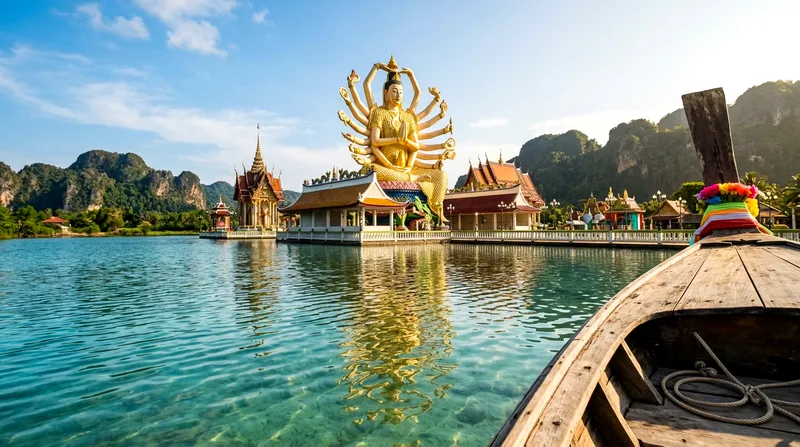
Wat Plai Laem sits just a few minutes from Big Buddha and is arguably more visually striking — an 18-armed statue of Guanyin, a multi-tiered temple reflected in a lake, and far more intricate decoration than Wat Phra Yai's single-statue simplicity. Most self-drivers and tours hit both in the same trip since they're so close together. Bophut's Fisherman's Village, a 10-minute drive away, gives you a walkable strip of restored wooden shophouses, restaurants, and a weekly Friday night market worth timing your visit around if your dates align.
Multi-stop tour itineraries
Half-day tours booked through Klook or hotel desks commonly combine Big Buddha, Wat Plai Laem, and a coastal viewpoint like Lad Koh or Secret Buddha Garden into a single 4-5 hour loop, often with hotel pickup included. Full-day versions sometimes add Angthong Marine Park or a Samui Elephant Sanctuary visit, though that makes for a long, rushed day — if you want the marine park properly, book it separately with more time allotted. For context, this kind of templed-out half-day is a similar format to what you'd find pairing Phuket's Big Buddha with Wat Chalong, or combining Krabi's Tiger Cave Temple with a viewpoint stop — compact, photogenic, and easy to slot into a single morning. Compare current combination-tour options and prices before booking, since inclusions and pickup zones vary by operator.
Frequently asked questions
What is the entrance fee for Big Buddha Ko Samui?
There's no official entrance fee — Wat Phra Yai is free to visit. You'll find donation boxes around the grounds, and a small voluntary contribution (50-100 baht is common) is appreciated but not required. Some informal parking lots nearby charge 20-50 baht, which is separate from temple entry.
What is the dress code at Wat Phra Yai?
Shoulders and knees must be covered — no tank tops, short shorts, or beachwear. Shoes come off before stepping onto the platform around the statue itself. Sarongs are sold or rented near the entrance for travelers caught underdressed, but it's easier to carry a light cover-up in your bag, especially if you're combining the temple with a beach day.
How do I get to Big Buddha Ko Samui?
Big Buddha sits on Ko Phan, just off Route 4171 near Bophut, about 10-15 minutes from Chaweng by car and 20-25 minutes from Samui Airport. Self-drive with free or low-cost parking is easiest if you have a rental; otherwise taxis run roughly 300-500 baht one-way (negotiate before boarding), or join a combination tour with hotel pickup included.
What nearby attractions can I combine with Big Buddha?
Wat Plai Laem, a few minutes away, pairs naturally with Big Buddha and is often considered the more visually impressive temple. Bophut's Fisherman's Village, about 10 minutes off, adds walkable restaurants and a Friday night market. Many half-day tours also include a coastal viewpoint like Lad Koh.
What is the best time to visit Big Buddha Ko Samui?
Arrive right at opening, around 6-9am, to avoid tour buses, or return after 4pm for cooler temperatures and softer light. Dry season (December to April) offers the clearest views over Bophut Bay but also the biggest crowds; October-November is quieter but carries a higher chance of sudden rain.