Compare luxury resort spas vs local massage shops for Ko Samui Thai massage. Pricing, couples packages, booking tips and what to expect.
Who Each Massage Type Suits
Ko Samui has more massage shops per block than most islands have restaurants, and that abundance creates a real decision rather than a formality. Walk down any street in Chaweng and you'll pass a dozen storefronts with plastic chairs out front and a laminated price list taped to the window — some good, some mediocre, a few genuinely excellent. The gap between a rushed, oil-slicked 60 minutes and a properly trained therapist working through tight shoulders is bigger than people expect before they arrive.
The honest starting point is deciding what you want from the experience, not just the treatment. A solo traveler squeezing in a massage between diving trips wants something fast, cheap, and reliably competent — not ambiance. A couple celebrating an anniversary wants a private room, two beds, maybe a view, and doesn't mind paying three or four times the street-shop rate for it. Families with kids in tow often want something quick and low-key near the pool, not a 90-minute aromatherapy ritual. None of these are wrong choices — they're just different products wearing the same name.
Solo travelers and wellness seekers
If you're traveling alone and plan to get a massage every few days rather than once as a treat, local shops are the better economics. A traditional Thai massage at a shop like Body & Soul Health Massage or similar operations in Lamai typically runs far below resort spa pricing, and the quality of actual bodywork — the stretching, pressure-point work, joint mobilization — is often comparable or better than what you'll get at a hotel spa staffed partly for atmosphere. Solo wellness seekers chasing a longer-term routine, say a massage every two or three days over a two-week stay, should scout two or three local shops near where they're staying and pick one they like rather than spa-hopping for novelty.
Couples and honeymooners
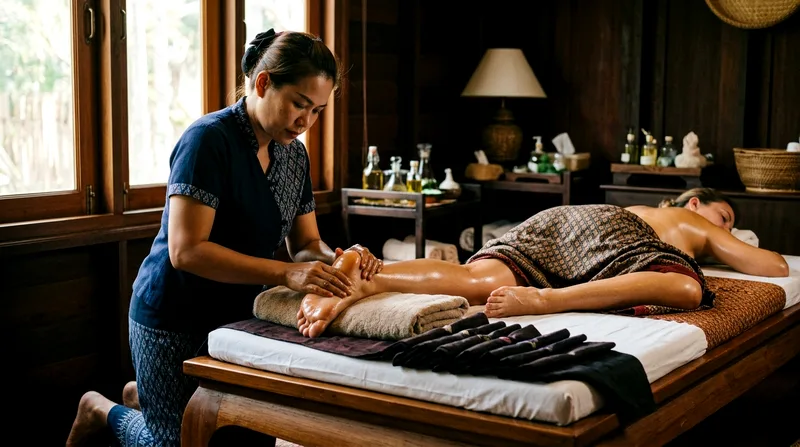
Couples massage packages are where Ko Samui genuinely earns comparisons to spa destinations like Phuket or Hua Hin. Properties such as Six Senses Samui build entire treatment pavilions with side-by-side beds, private outdoor showers, and views toward the hills or sea — the kind of setting local shops simply can't replicate on a shophouse budget. If a couples package matters more than the massage technique itself, book the resort spa experience and treat it as a few hours of rented tranquility rather than a massage transaction. Just confirm in advance whether "couples package" means two adjacent beds in one room or two separate single rooms — some properties still split couples despite advertising joint treatments.
Luxury Resort Spas vs Local Shops
This is the real fork in the road for Ko Samui Thai massage, and it's worth being blunt about it: price difference rarely reflects a proportional difference in massage skill. A resort spa charges more for the robe, the welcome tea, the scented towel, the private changing room, and the real estate the building sits on — not necessarily for a therapist with dramatically better hands than the woman working out of a shopfront in Lamai.
That said, local shops vary wildly in quality, and that inconsistency is the trade-off you're accepting for the lower price. Some operate with trained, experienced staff who've worked for a decade; others rotate younger, less experienced therapists through peak season. Reading recent reviews matters more at local shops than at resort spas, where quality control tends to be more consistent because management has more oversight and higher staff retention.
Local shops deliver the best value for routine massage, while resort spas justify their price mainly through setting and couples packages.
Ko Samui Thai massage options compared: price, ambiance, and booking ease
| Option | Typical Price Tier | Ambiance | Booking Ease | Best For |
|---|---|---|---|---|
| Street-level local shop | Lowest | Basic, open-air or simple room | Walk-in, no wait usually | Budget travelers, frequent massage |
| Boutique day spa (e.g. Urban Thai Spa, Cyan Spa) | Mid-range | Private, air-conditioned | Same-day booking advisable | Couples on a moderate budget |
| Wellness/fitness-linked spa (e.g. Koh Fit) | Mid-range | Clinical, focused | Advance booking for sports massage | Active travelers, injury recovery |
| Mid-tier traditional spa (e.g. Koh Spa, Salaraj) | Mid to upper-mid | Calm, traditional decor | Advance booking recommended | Value seekers wanting authenticity |
| Luxury resort spa (e.g. Six Senses Samui) | Highest | High-end, private suites | Book 1-2 days ahead | Honeymooners, special occasions |
Typical tiers only; exact prices shift by season and property, so check current rates and reviews before booking.
Ambiance, service, and pricing tiers
Expect three rough tiers on the island. At the top, resort spas like those at Six Senses or similar high-end properties charge premium rates for full-service treatments with extended rituals, private suites, and amenities like steam rooms or outdoor baths. In the middle sit boutique day spas — places like Urban Thai Spa or Cyan Spa & Massages — offering air-conditioned private rooms, trained staff, and a proper menu of oil, aromatherapy, and traditional treatments at a noticeably lower price than resort properties. At the bottom, street-level shops offer open or semi-private rooms, mats on the floor for traditional massage, and the lowest prices on the island — often a quarter of resort rates for a comparable traditional massage.
Authenticity and value comparison
If "authentic" means traditional technique — the assisted stretching, the walking pressure, the joint work passed down through old-style training — you'll often find it more intact at local shops than at resort spas, which sometimes soften the technique for Western comfort. Places such as Koh Spa or Salaraj Thai Wellness & Spa sit in a useful middle ground: proper training, a calm setting, but pricing closer to local shops than five-star resorts. For pure value, that middle tier is usually the smartest booking on the island.
Massage Types and Techniques
Traditional Thai massage dominates menus across the island, but it's not the only option, and conflating all massage styles leads to disappointment — particularly if you're expecting something closer to a Swedish spa treatment and get two hours of assisted yoga stretches instead.
Traditional Thai and oil massage
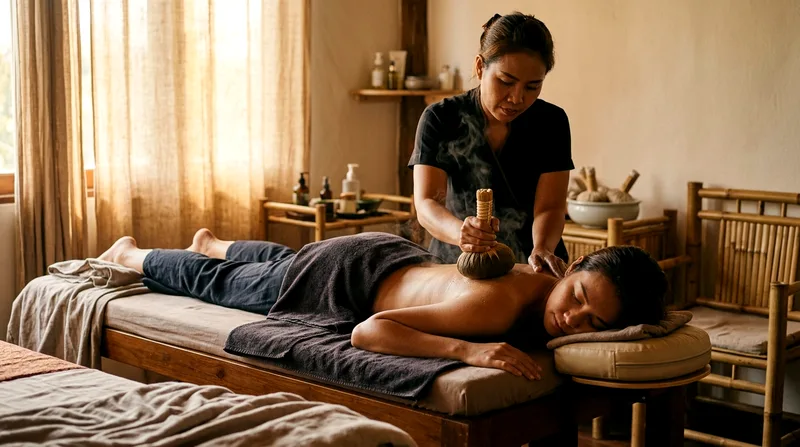
Traditional Thai massage is performed on a floor mat, fully clothed, using compression, stretching, and assisted yoga-like positions rather than gliding strokes. It's intense, sometimes uncomfortable in a good way, and typically runs 60 to 120 minutes. Oil massage, by contrast, uses lighter clothing or draping and focuses on relaxation with long strokes, similar to what European travelers may recognize from aromatherapy spas back home. If you've never had traditional Thai massage, start with 60 minutes — some first-timers find 90 or 120 minutes intense on the first try, particularly around the legs and shoulders.
Sports and deep tissue options
For travelers dealing with a specific issue — a stiff back from diving, sore legs after trekking near Na Muang waterfalls, or general muscle tightness — look for shops advertising sports massage or deep tissue work specifically, sometimes offered at places like Koh Fit alongside fitness-oriented services. These sessions use firmer, more targeted pressure than standard Thai massage and are less about relaxation and more about working out knots. Be upfront with the therapist about pain tolerance before starting; deep tissue in Samui can be genuinely forceful, more so than equivalent treatments in Europe.
What to Look for When Booking
The massage itself is only part of the booking decision. Hygiene standards, therapist training, and cancellation flexibility vary more than price alone suggests, and skipping this check is how people end up with an underwhelming hour.
Inclusions, therapist qualifications, cancellation policies
Ask what's included before you lie down — some packages bundle a shower, herbal compress, or tea service, others charge separately. Reputable shops display therapist certificates, often from recognized Thai massage schools in Chiang Mai or Bangkok; it's reasonable to ask how long a therapist has practiced, especially for deep tissue or sports work. Resort spas almost always require prepayment with clear cancellation windows, typically 24 hours; local shops are far more casual and rarely penalize a no-show beyond losing your spot.
Walk-in vs advance reservation
Local shops in Chaweng and Lamai run almost entirely on walk-ins — just show up, check the price board, and you're usually on a mat within 10 minutes outside peak evening hours. Resort spas and higher-end boutique spas need advance booking, ideally a day ahead, and couples packages during high season (December to February) can fill up by midday. If you're set on a specific treatment time at a nicer spa, book that morning at the latest, and compare current prices and reviews before confirming, since seasonal rates shift.
Best Areas and Accessibility
Where you stay on Ko Samui shapes which massage tier makes sense logistically. Dragging yourself across the island for a cheaper massage rarely saves money once you factor in a taxi.
Chaweng, Lamai, and Fisherman's Village
Chaweng has the highest concentration of massage shops on the island, ranging from basic beachfront stalls to polished operations like Urban Thai Spa, making it the easiest place to compare options side by side. Lamai is quieter and generally cheaper, with a strong cluster of long-running local shops favored by residents over tourists. Fisherman's Village in Bophut has a more boutique feel — fewer shops but generally tidier, with a slightly higher price point that still undercuts resort spas substantially. Compared with Koh Phangan or Koh Tao, Samui simply has more volume and more mid-tier boutique options, though Phuket still beats it on sheer luxury spa density.
Transportation and operating hours
Most shops open around 10am and run until 10 or 11pm, with walk-in availability strongest in the early afternoon before the post-beach rush. Songthaews (shared pickup trucks) circle the main ring road constantly and cost a small flat fare between areas, making shop-hopping between Chaweng and Lamai easy without a rental car. If you're staying near Maenam or Choeng Mon, expect fewer walk-in options nearby and more reliance on resort spas or a short taxi ride.
Frequently asked questions
How much does Thai massage cost in Ko Samui?
Street-level shops in Chaweng or Lamai charge the least for a standard one-hour traditional massage, boutique day spas charge roughly two to three times that for a private air-conditioned room, and luxury resort spas charge several times the street rate once you add treatment rituals and amenities. Prices shift with season and location, so compare current listings before booking rather than relying on fixed figures.
What is the difference between luxury spas and local massage shops?
Luxury spas charge for setting — private suites, amenities, consistent staff training, and prepaid booking systems. Local shops charge far less and quality varies more, but the traditional massage technique itself is often just as skilled, sometimes more faithful to classic style since there's less adaptation for Western comfort.
Are there couples massage packages available?
Yes, widely. Resort spas like Six Senses Samui build dedicated couples pavilions with side-by-side treatment beds, while boutique spas such as Cyan Spa & Massages offer smaller private double rooms at a lower price. Confirm whether "couples" means one shared room before booking, since some properties still separate guests into adjoining singles.
Which areas have the best massage options?
Chaweng has the largest selection and easiest comparison shopping, Lamai is quieter and generally cheaper, and Fisherman's Village in Bophut offers a tidier boutique feel at a moderate price. Choose based on where you're staying first — cross-island taxis for a marginally cheaper massage rarely pay off.
Do I need to book in advance or can I walk in?
Local shops run almost entirely on walk-ins, with minimal wait outside the evening rush. Resort spas and popular boutique spas need booking a day or so ahead, especially for couples packages during December to February high season.