Ko Samui taxi vs private transfer compared: prices, reliability, comfort and luggage space. Find the best way to get around for your trip type.
The Three Options at a Glance
Ko Samui doesn't have Uber, it doesn't have a metro, and its public bus network is informal at best. That leaves three realistic ways to move around: songthaews, metered taxis, and private transfers. Each solves a different problem, and the Ko Samui taxi vs private transfer question actually misses a third contender that locals use constantly and tourists mostly ignore.
The island runs about 25km from Chaweng in the northeast down to Lamai, with Bophut and the airport sitting further north. Distances are short by most standards, but a single road network and seasonal traffic around Chaweng Beach mean journey times vary more than you'd expect from the map.
Private transfers cost the most but remove all uncertainty, while songthaews are cheapest but limited to daytime, main-road routes.
Ko Samui taxi vs private transfer vs songthaew compared
| Option | Typical Cost | Booking Method | Best For | Luggage Space |
|---|---|---|---|---|
| Songthaew | Budget (shared fare) | Flag down roadside | Short hops, daytime | Minimal, carry-on only |
| Metered taxi (negotiated) | Mid-range | Hail or hotel call | Flexible one-off trips | Moderate, trunk space |
| Private transfer | Premium | Pre-booked online | Airport transfers, groups | Generous, vans available |
Typical cost bands and journey patterns; actual fares shift with fuel prices and negotiation, so confirm before you travel.
Songthaews: shared minibuses
Songthaews are converted pickup trucks with two bench seats in the back, running loosely fixed routes along the main ring road connecting Chaweng, Lamai, and Bophut. You flag them down roadside, hop in with other passengers, and pay the driver when you get off — typically 50-100 baht per person for a ride along the main strip. There's no fixed schedule and no app; you just wait, and in daytime that's rarely more than 10-15 minutes.
The catch: songthaews don't go everywhere. They stick to the ring road, so if your hotel is up a side soi, you're walking the last stretch. They also tend to vanish after dark, especially on quieter stretches toward Maenam. Fine for short hops between beaches in daylight, not something to rely on for an airport run or a late dinner return.
Metered taxis: on-demand cabs
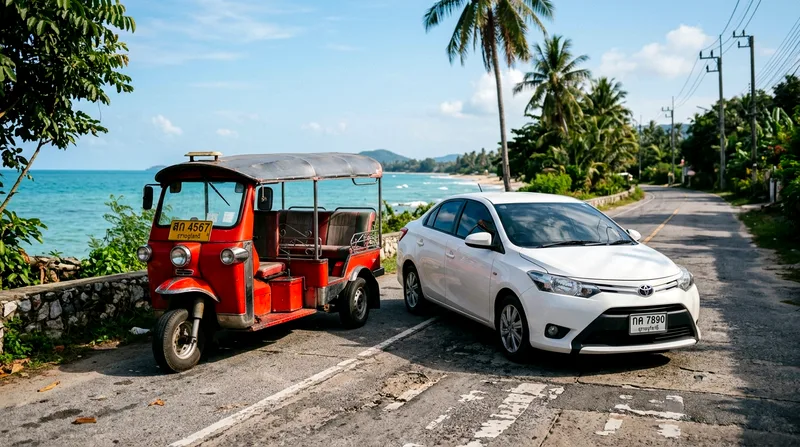
Here's the uncomfortable truth about Ko Samui taxi service: most drivers refuse to use the meter, despite having one installed. You'll negotiate a flat fare before getting in, almost every time. A ride from Chaweng to Lamai might run 300-400 baht; Chaweng to the airport often lands between 400-600 baht depending on who you ask and how firmly you negotiate.
Taxis are easiest to find outside hotels, at the airport rank, and along main beach roads — just don't expect one to appear instantly in Bophut at midnight. Compared to Phuket, where taxi mafias are notorious for inflated fixed rates, Samui's scene is slightly less organized but similarly resistant to metered pricing. If you want a taxi reliably, ask your hotel to call one rather than hailing on the street.
Private transfers: pre-booked cars
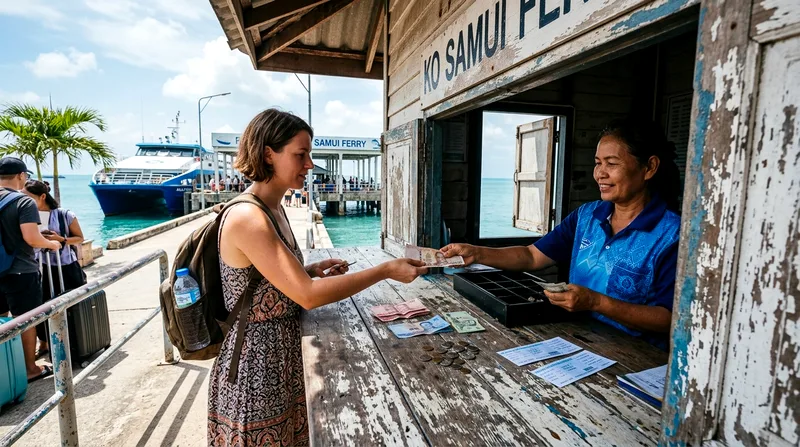
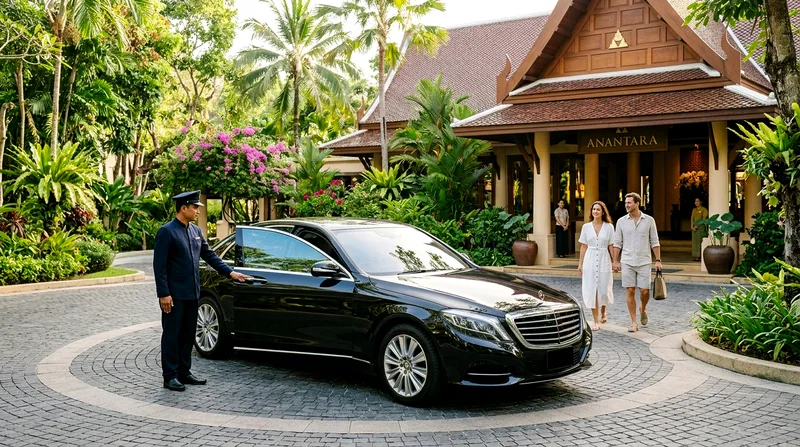
A private transfer is booked in advance — usually online before you land — with a fixed price agreed upfront and a driver waiting with a name sign at Ko Samui Airport arrivals. No haggling, no waiting at a taxi rank, no language barrier. Vehicles range from sedans to larger vans for groups, and most operators track your flight, so a delay doesn't strand you.
This is the premium option, typically costing noticeably more than a negotiated taxi fare for the same route. The value isn't speed — it's certainty. If you're landing after a long-haul flight with jet-lagged kids or elderly parents, knowing the ride is sorted before you touch down is worth paying for.
Head-to-Head: Cost, Time & Comfort
Strip away the marketing and this comes down to three variables most travelers actually weigh: what it costs, how long it takes, and whether you'll arrive comfortable or crammed.
Price per journey
Songthaews win on raw price every time — a Chaweng-to-Lamai hop costs a fraction of a taxi fare. But private transfer cost on Ko Samui isn't as outrageous as people assume once you split it across a family of four; per-person, it can land close to what four separate taxi negotiations would cost, minus the haggling. Compare that to Phuket airport transfers, which run higher due to longer average distances from the airport to Patong or Kata — Samui's shorter geography keeps transfer prices more reasonable by comparison.
Travel time and stops
A private transfer goes point-to-point with no stops — Ko Samui Airport to Chaweng Beach typically takes 20-30 minutes depending on traffic. A taxi does the same route directly once you're in it, so time-wise there's little difference. Songthaews are the slow option: multiple stops to pick up and drop off other passengers can turn a 15-minute direct drive into 30-40 minutes, which matters if you've got a dinner reservation or a tight ferry connection to Koh Phangan.
Luggage and space
This is where songthaews fall apart for arriving travelers. Two large suitcases barely fit on those bench seats, and with other passengers aboard, there's nowhere to put them. Taxis handle one or two bags fine in the trunk. Private transfers, especially van options, comfortably take four to six large bags plus carry-ons — the obvious choice if you're arriving for a two-week stay with diving gear or arriving as a family of five.
Reliability and Safety Comparison
Cost and comfort matter, but reliability is where the Ko Samui taxi vs private transfer debate actually gets decided for most travelers — particularly those landing late or traveling with family.
Booking certainty
A private transfer booked in advance means a driver is contractually waiting for you, flight delays accounted for. Taxis offer zero certainty — if you land at 11pm and the rank is empty, you wait, and during peak season that wait can stretch past 20 minutes. Songthaews offer no certainty at all after dark; they largely stop running once the sun goes down, which rules them out for any evening airport arrival or late return from a Lamai night market.
Driver professionalism
Private transfer drivers are vetted by the booking company and tend to be more consistent — English-speaking, aware of hotel locations, generally safer drivers. Taxi and songthaew drivers vary widely; some are excellent, some drive aggressively on the ring road's tighter curves near Lamai. I wouldn't call Samui unsafe compared to Koh Phangan's notoriously chaotic rental-scooter culture, but informal transport here still runs on personal negotiation rather than fixed standards, and that inconsistency is the main trade-off you're accepting by choosing cheaper options.
Who Should Book Which Option
There's no single right answer — it depends entirely on your trip shape, group size, and tolerance for uncertainty.
Budget travelers and backpackers
If you're counting baht the way you would in Koh Tao's dive hostels, songthaews are your default for daytime moves between Chaweng, Lamai, and Bophut. Pair that with a single negotiated taxi for the airport leg rather than a private transfer — you'll save money and the inconvenience is minor if you're traveling light. Avoid songthaews after 8pm; that's when you'll be stranded roadside negotiating with a taxi driver anyway, at a worse rate than if you'd just booked one from the start.
Families and groups
This is the clearest case for a private transfer. Splitting the cost across four or five people often makes it cheaper per head than multiple taxis, and you avoid shepherding kids and luggage through a negotiation in the arrivals hall. A van transfer also means no one gets left waiting roadside while you flag a second taxi. For inter-beach days once you're settled, taxis are fine — but book the airport legs both ways in advance.
Business travelers
If you're on a tight schedule for a conference in Chaweng or a meeting near Bophut, a private transfer removes the one variable you can't afford — unpredictable wait times. The cost difference versus a taxi is usually modest for a single rider, and the certainty of a pre-arranged pickup outweighs the saving. This is the one traveler type where I'd skip taxis entirely for anything time-sensitive.
Verdict: Your Best Choice
If you want one rule: book a private transfer for your first and last journey — airport to hotel, hotel to airport — and use taxis or songthaews for everything in between. That hybrid approach gets you certainty when jet lag and luggage make it matter most, and savings when you're just hopping between Chaweng and a restaurant in Bophut.
Solo travelers and backpackers can lean harder into songthaews and negotiated taxis — the savings add up over a week-long stay, and the inconvenience is minimal without kids or heavy bags in tow. Couples on a short break often split the difference, booking transfers for arrival day and taxis thereafter. Senior travelers and anyone less comfortable negotiating fares in a foreign language should default to private transfers more often than the cost difference alone would suggest — the stress saved is worth something.
What I wouldn't do: rely on songthaews for your airport transfer, ever. They don't reliably serve the airport route, and timing one to match a flight is a bad bet. I also wouldn't book a private transfer for a five-minute hop from Chaweng to a neighboring soi — that's taxi money, not transfer money. Once you're settled, this island rewards flexibility more than pre-planning, so keep a mix in your toolkit rather than locking into one option for the whole trip. If you're also island-hopping to Koh Phangan or Koh Tao, factor ferry transfer coordination into whichever option you book for that final journey to the pier.
Frequently asked questions
How much does a taxi cost from Ko Samui Airport?
Expect to negotiate, since most drivers skip the meter despite having one. A taxi from Ko Samui Airport to Chaweng Beach typically runs in the mid-range for the island — noticeably less than a pre-booked private transfer, but you'll need to agree the fare before getting in, and prices creep up during peak arrival hours.
Are songthaews safe for tourists?
Generally yes, during daylight hours on the main ring road. They're open-air pickup trucks with bench seating, so there's no seatbelt and limited protection in an accident, but incidents are uncommon at the low speeds typical of island traffic. Avoid them after dark, when service thins out and roadside waiting becomes a safety concern in itself.
Can you book a private transfer in advance?
Yes, and you should — most travelers book online before departure, specifying flight details so the driver can track delays. You'll typically pay a fixed price upfront with no further negotiation, and a driver meets you at arrivals holding a name sign, which removes the uncertainty of hailing transport after a long flight.
Which option is best for families with children?
Private transfers, especially for the airport legs. Van-sized vehicles handle car seats, strollers, and multiple suitcases without the scramble of negotiating two or three separate taxis in a crowded arrivals hall. For short daytime trips between beaches once you're settled, taxis work fine for families too.
Do taxis in Ko Samui use meters?
Rarely in practice, even though meters are installed. Almost all fares are negotiated upfront between passenger and driver before the journey starts. Ask your hotel reception for a rough fare benchmark before you hail one on the street, so you know if you're being quoted a reasonable number.