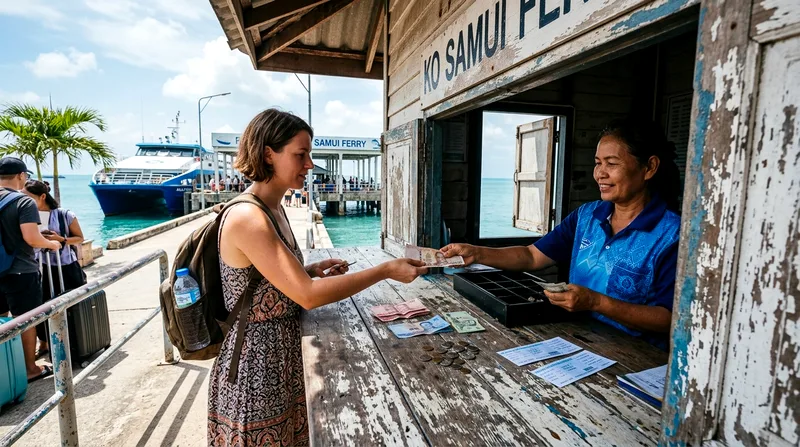
Book Ko Samui ferry tickets online. Compare routes to Surat Thani, Ko Phangan & Ko Tao. Operator pricing, schedules & official booking channels.
What Ko Samui Ferry Tickets Include
Ko Samui ferry tickets cover one thing above all: your seat on a specific sailing between two piers. That sounds obvious, but it matters because Gulf of Thailand ferry routes often involve a combined ticket — a van or songthaew transfer from your hotel to the pier, then the boat crossing itself. Lomprayah and several other operators sell these combo tickets as a single fare, which saves you arranging transport separately and is usually worth the modest premium over a boat-only ticket.
What you're actually buying is a reserved spot on a numbered or semi-open seating ferry, departure from a named pier (Nathon, Don Sak, or Koh Samui International Pier, depending on operator), and in most cases a printed or e-ticket you show at check-in. Standard ferries - the slower car-and-passenger boats - tend to have open seating on a first-come basis even with a confirmed ticket, while high-speed catamarans usually assign specific seats.
I'd treat the ticket price as the floor, not the whole cost. Baggage beyond a normal backpack or suitcase is usually fine, but oversized items like surfboards or bicycles can attract a small surcharge paid at the pier, not online. If you're traveling with young kids, note that some operators discount under a certain height or age but you'll need to ask at booking rather than assume.
Seat Reservation and Passenger Insurance
A confirmed Ko Samui ferry ticket reserves your place on that sailing, and most operators build basic passenger accident insurance into the fare — standard practice across Thai domestic ferry operators, though coverage limits vary and are rarely spelled out clearly on booking pages. This is not a substitute for your own travel insurance. If a sailing is cancelled for weather, the passenger insurance does nothing for your onward hotel booking or missed flight — that's on your separate travel policy. Don't assume the ferry ticket protects your whole itinerary; it only protects you for the crossing itself.
What's Not Covered in Your Ticket
Pier departure fees are sometimes bundled, sometimes not — check before you assume. Food and drink on board is rarely included beyond a bottle of water on the pricier catamaran services. Also missing from most standard tickets: guaranteed air conditioning seating (older ferries sometimes have open-deck sections only), and any compensation for delays under a few hours, which happen more often than operators advertise, especially on the Don Sak to Samui crossing during monsoon swells between roughly October and December.
Mainland & Inter-Island Routes Explained
There are two fundamentally different trips sold under "Ko Samui ferry tickets," and conflating them is the most common planning mistake. One is the mainland connection — getting to or from Surat Thani, which most travelers need for flights, trains, or buses to Bangkok. The other is inter-island hopping to Ko Phangan or Ko Tao, which is a shorter, simpler crossing within the same island group.
The Samui-to-Phangan hop is short and frequent, while the Surat Thani mainland connection takes longest and needs the most buffer time.
Ko Samui ferry routes compared: duration, pier, and typical use
| Route | Approx. Duration | Departure Pier | Best For |
|---|---|---|---|
| Ko Samui–Surat Thani (Don Sak) | 1–1.5 hours | Nathon / Koh Samui International Pier | Mainland transfers, flights, trains |
| Ko Samui–Ko Phangan | 30–45 min | Nathon / Big Buddha Pier | Quick island hop, day trips |
| Ko Samui–Ko Tao | 1.5–2 hours | Nathon / Koh Samui International Pier | Diving trips, longer island loop |
| Ko Samui–Chumphon (via connection) | 3+ hours combined | Varies by operator | Bangkok overland connections |
Durations are typical and vary by operator, sea conditions, and season; always check the current timetable before booking.
Ko Samui to Surat Thani (Don Sak Pier)
The Ko Samui to Surat Thani ferry route actually runs via Don Sak Pier on the mainland side, not directly into Surat Thani town. Expect roughly 1 to 1.5 hours by standard car ferry, departing from Nathon Pier or Koh Samui International Pier. From Don Sak, a connecting bus or van usually continues to Surat Thani's bus terminal, train station, or airport — budget another 1 to 1.5 hours for that leg. Combination tickets covering boat plus bus are common and generally cheaper than booking each segment separately. If you're catching a flight out of Surat Thani airport, build in a real buffer: a 3-hour gap between ferry departure and flight time is reasonable, not excessive, given how pier transfers can run late.
Inter-Island Routes: Ko Phangan and Ko Tao
The Ko Samui to Ko Phangan ferry is the shortest hop in the region — around 30 to 45 minutes by high-speed boat, with multiple daily departures from Nathon or Big Buddha Pier depending on operator. It's a popular enough route that booking same-day at the pier is usually fine outside Full Moon Party weekends.
The Ko Samui to Ko Tao ferry takes longer, typically 1.5 to 2 hours by high-speed catamaran, and often routes via Ko Phangan as a stop rather than running direct. Some travelers also connect through Chumphon Pier on the mainland if arriving from Bangkok by train-bus-boat combo tickets, which is a separate itinerary from the Samui-based routes but worth knowing if you're planning a longer Gulf island loop.
Ferry Operators & Booking Channels
Several operators run the Samui ferry network, each with different pier access and route strengths. Lomprayah is probably the best-known name for high-speed catamaran service linking Samui, Phangan, Tao, and the mainland via Chumphon, and its boats tend to be newer and faster than the standard car ferries. Other operators focus more on the Don Sak–Nathon car ferry crossing, which is slower but carries vehicles and tends to run more frequently throughout the day.
No single operator covers every route at every time, which is the main reason third-party booking platforms exist — they aggregate multiple operators so you can compare a 9am high-speed option against an 11am standard ferry without checking five different sites.
Major Operators and Their Service Areas
Expect a rough split: high-speed catamaran operators dominate the Samui-Phangan-Tao inter-island corridor, while car-ferry operators dominate the Don Sak mainland crossing. Some operators run both types of boats under one brand, which can get confusing when comparing prices — a car ferry crossing to Don Sak is usually cheaper than a high-speed boat covering the same stretch, but it's also slower and has fewer daily departures.
Official Websites vs Third-Party Platforms
Booking directly on an operator's official website guarantees you're seeing that company's real-time availability and avoids any markup from resellers. Third-party platforms are convenient for comparing routes and operators side by side, and most reputable ones simply pass your booking through to the operator's own system — but always check that the platform clearly states cancellation terms before paying, since policies vary and some resellers add non-refundable booking fees that aren't obvious until checkout.
Online vs Pier Pricing & Booking
Booking Ko Samui ferry tickets online versus buying at the pier isn't usually a huge price gap, but it is a convenience and certainty gap. Online booking locks your seat and sailing time in advance; pier purchases are pay-as-you-go and depend entirely on how full that sailing already is. During quieter months — roughly May, June, September, October outside of storm disruptions — pier booking on the day is often fine for inter-island hops like Samui-Phangan.
Price Differences and Booking Fees
Fares published on operator websites are usually close to what you'd pay at the pier counter, though some third-party platforms add a modest service fee for the convenience of online payment and English-language support. I'd rather pay a small fee and have a confirmed seat than save a few baht and risk being bumped to a later sailing, which does happen on popular routes during peak travel weeks like Christmas through New Year.
Cancellation and Refund Policies
Refund policies differ by operator and by how far ahead you cancel — some allow free changes up to 24 hours before departure, others charge a percentage fee regardless of notice. Weather cancellations are usually handled by rebooking you onto the next available sailing rather than issuing a cash refund, which is standard across the industry here, not a sign of a disreputable operator. Read the fine print before paying, since this is the detail most travelers skip.
Is It Worth Booking in Advance?
For most routes, booking two to four days ahead is a reasonable middle ground — early enough to avoid sold-out sailings, late enough that you're not locked into plans before you've settled on an itinerary. The exception is anything touching Ko Phangan around Full Moon Party dates, when every seat on every operator can sell out days in advance.
Peak Season vs Off-Season Considerations
December through February and July-August are Samui's busiest tourist months, and ferry demand follows the same pattern — book at least 3-5 days ahead during these windows, especially for morning departures that connect to flights. Off-season, roughly May through October outside of storm weeks, same-day or next-day booking is usually workable, though the southwest monsoon can bring rough seas and occasional cancellations on exposed routes, particularly the Don Sak crossing.
Best Practices by Traveller Type
Solo travelers and backpackers have the most flexibility and can often book a day ahead without issue. Families should book earlier and pick combo tickets with transfers included, since wrangling luggage and kids through a pier transfer adds stress you don't need. Couples on a tight honeymoon schedule should lock in both outbound and return journeys early, particularly if connecting onward to Krabi or Phuket by flight from Surat Thani. Senior travelers should prioritize high-speed catamarans over older open-deck standard ferries for comfort, and confirm step-free boarding where possible, since pier gangways aren't always level.
Frequently asked questions
How far in advance should I book Ko Samui ferry tickets?
Two to four days ahead covers most routes comfortably. During December-February peak season or around Full Moon Party dates on Ko Phangan, book 5-7 days ahead since popular morning sailings sell out. Off-season, same-day pier booking is often fine for short inter-island hops.
Which ferry operator is most reliable from Ko Samui?
Lomprayah is the most widely recognized name for high-speed catamaran routes covering Samui, Phangan, Tao, and the mainland via Chumphon, with a reputation for reasonably punctual sailings. Standard car-ferry operators on the Don Sak crossing are generally reliable too, just slower. Always check current reviews and operator status directly on official booking sites rather than relying on brand name alone.
Can I book a return ferry ticket online?
Yes, most operators and third-party platforms sell round-trip tickets, sometimes at a small discount versus two one-way fares. Return tickets lock in your outbound sailing but usually let you choose a flexible return date within a set window — check the specific terms, since some require a fixed return time.
What happens if my ferry is cancelled due to weather?
Operators typically rebook you onto the next available sailing rather than issuing a cash refund, which is standard practice during the Gulf of Thailand monsoon season (roughly October-December). Build buffer time into onward travel plans like flights, since weather delays of a few hours are common and not unusual.
Are there discounts for booking multiple tickets together?
Some operators offer modest discounts for group or family bookings, particularly on combo tickets bundling boat and bus or van transfers. These aren't universal, so check the specific operator's current pricing page rather than assuming a discount applies — don't rely on third-party sites advertising group rates without confirming on the official source.