Discover ethical elephant sanctuaries in Ko Samui. Learn what's included, pricing, age requirements, and how to book no-ride experiences responsibly.
What Is an Ethical Elephant Sanctuary
A Ko Samui elephant sanctuary, in the genuine sense of the term, is a facility that has retired its elephants from riding, performing, or logging work and now lets them live out their days with minimal human interference. That's the theory. In practice, the word "sanctuary" gets slapped on plenty of venues across Thailand — including a handful on Samui — that still charge for bathing sessions, feeding photo-ops, and guided "interactions" on a tight schedule. The difference between a real sanctuary and a relabeled elephant camp often comes down to whether the elephants can walk away from visitors, and whether staff use bullhooks or visible restraints.
I'd treat the term skeptically rather than at face value. Look for specifics: does the operator mention chain-free enclosures, a vet on call, or a no-contact option for elephants that don't want to engage that day? Those details separate a welfare-first operation from a marketing exercise.
Sanctuary standards and animal care
Credible sanctuaries in Thailand generally follow guidelines set by animal welfare organizations such as World Animal Protection and groups that audit elephant tourism venues — things like minimum space per elephant, access to shade and water, varied diet, and no performance training. On Samui specifically, space is tighter than at the large rescue parks near Chiang Mai, so look for sanctuaries that partner with mainland rescue networks or rotate elephants between larger reserves. A smaller footprint isn't automatically a dealbreaker, but it does mean you should ask direct questions before booking: how many elephants are on site, how much land do they have, and what happens when they're not being visited.
How sanctuaries differ from camps
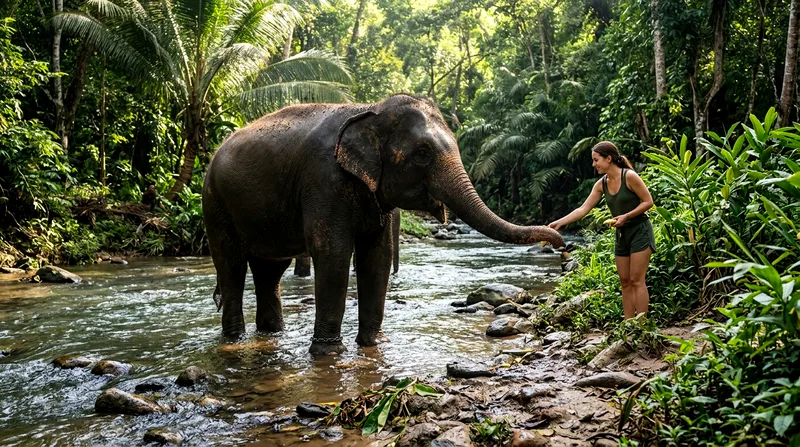
A traditional elephant camp sells rides, shows, or paid photo sessions where the elephant performs on command. A sanctuary, done properly, sells observation and limited, elephant-initiated contact — feeding by hand at a distance the elephant chooses, walking alongside them on a trail, or watching them bathe without being pulled into the water for a photo. If a listing advertises "ride" anywhere in the package name, it's a camp regardless of what else it calls itself. If it advertises "no-ride, no-show," that's a stronger signal, though you should still read reviews for mentions of chains or hooks.
Why Choose No-Ride Experiences
Riding elephants causes measurable physical harm over time — their spines aren't built to carry saddles and human weight the way a horse's is, and years of tourist riding contribute to lasting back and joint damage. This isn't a fringe opinion anymore; it's well documented by veterinary researchers who've studied working elephants across Thailand, Laos, and India. A no-ride elephant tour in Ko Samui sidesteps that harm entirely, and it tends to attract operators who've also dropped other exploitative practices, like forced performances or excessive chaining.
Elephant welfare and physical impact
Beyond spinal stress, ride-based tourism usually requires elephants to work long hours in heat, often with inadequate rest or water access between sessions. No-ride sanctuaries typically cap visitor groups and build in rest periods, letting elephants retreat from human contact when they choose. If you see elephants roaming an open area rather than standing in a fixed spot waiting for the next group, that's a decent sign the operation prioritizes the animal's day over the visitor's schedule.
Responsible tourism benefits
Choosing a no-ride venue sends a demand signal that shifts the local tourism economy — fewer riding camps survive when travelers stop booking them. It also tends to mean your money supports local mahouts who are paid to care for elephants rather than to perform tricks with them, which is a better long-term employment model for the people involved too. This is the same shift that's happened at well-regarded rescue parks near Chiang Mai, and Samui's handful of ethical operators are following that template on a smaller scale.
How to Visit: Independent vs. Guided Tours
You've got two real options on Ko Samui: show up at a sanctuary directly, or book through a tour operator who bundles transport, entry, and sometimes lunch. Unlike Chiang Mai, where you can realistically self-drive to several large elephant parks, Samui's sanctuaries are fewer and more spread out along inland roads near Na Mueang and the island's central hills, so independent access is more limited than you'd think.
Guided half-day tours suit most visitors, while independent access only works well if you already have reliable transport and advance booking confirmed.
Ko Samui elephant sanctuary visit options compared
| Option | Typical Cost | Duration | Transport | Best For |
|---|---|---|---|---|
| Guided half-day tour | Mid-range, check current price | 3-4 hours | Hotel pickup included | First-time visitors, no rental vehicle |
| Guided full-day tour | Higher, check current price | 6-8 hours | Hotel pickup included | Combining with waterfall or cooking class |
| Independent self-drive visit | Entry fee only, often lower | 2-3 hours on site | Own scooter or car required | Confident drivers, flexible schedules |
| Walk-in without booking | Variable, risk of refusal | Uncertain | Own transport | Not recommended — many cap daily visitors |
Typical figures; exact pricing and availability vary by operator and season, so check current rates before booking.
Self-guided sanctuary visits
If you have a rental car or scooter and are comfortable navigating unpaved access roads, you can drive directly to a sanctuary and pay the entry fee on arrival — assuming it accepts walk-ins, which not all do. The upside is flexibility: you choose your own timing and skip group logistics. The downside is real: some sanctuaries require advance booking because they cap daily visitor numbers to limit stress on the elephants, so turning up unannounced risks being turned away. Call or book online a day ahead at minimum.
Organized tour operators
Most visitors book through a responsible travel operator that includes hotel pickup from areas like Chaweng, Lamai, or Bophut, round-trip transport, and a guide who explains sanctuary rules before you arrive. This is the easier route if you don't want to deal with Samui's inland roads, which get steep and poorly signed past the coastal ring road. Expect pickup roughly 30–60 minutes before the session start, depending on your hotel's location relative to the sanctuary.
Tickets, Entry Fees & Booking
Entry fees at ethical sanctuaries on Samui are generally higher than at old-style riding camps, partly because they run smaller groups and partly because feeding and veterinary care cost more without ride-based revenue. Exact pricing shifts between operators and season, so compare current prices and availability before you book rather than relying on a number you saw months ago.
Typical pricing structures
Most no-ride sanctuary visits on Samui are sold as half-day packages that include hotel transfer, a guided walk or observation session, elephant feeding, and sometimes a light meal for visitors. Full-day options, where offered, usually add a second activity block or combine the elephant visit with another nearby attraction. Children are often priced lower than adults, and some operators waive fees entirely for toddlers who won't participate in feeding or walking segments — confirm this when booking rather than assuming.
What's included in packages
A standard package usually covers round-trip transport, sanctuary entry, a guide's briefing on elephant behavior and safety, and a bag of fruit or vegetables for feeding. It rarely includes insurance, so check your own travel policy covers close-contact wildlife activities if that matters to you. Some venues set a minimum age — commonly around 4 to 6 years old — because younger children can startle or be startled by elephants at close range, and a few require closed-toe shoes given the uneven, sometimes muddy terrain.
Best Time to Visit
Samui's weather pattern runs opposite to much of Thailand's west coast — the wettest months are typically October through December, while the driest, most comfortable stretch runs roughly from January through August, with April and May bringing the most heat. That matters for an outdoor elephant visit more than for most Samui activities, since sessions happen on open trails and riverbanks with little shelter.
Seasonal weather considerations
Book morning sessions between January and April if you want dry trails and manageable heat — afternoons in April and May regularly push past 33°C (91°F), which is tough for visitors even if the elephants handle it fine. If you're traveling in November, expect occasional heavy rain that can cancel or reroute sanctuary walks, so build a flexible day around it rather than scheduling a tight connection to a ferry or flight right after.
Crowd patterns and elephant behavior
Morning sessions, typically starting between 8:30 and 9:30 a.m., tend to catch elephants more active and interested in feeding, before the midday heat slows everyone down. Afternoon slots are usually quieter in terms of visitor numbers but the elephants themselves may retreat to shade and engage less — which, from a welfare standpoint, is exactly what they should be allowed to do. Don't book an afternoon slot expecting the same interaction level as a morning one, and don't push a tired elephant into feeding time if staff suggest otherwise.
Nearby Attractions & Add-Ons
Samui's inland sanctuaries sit close enough to several other half-day attractions that pairing them makes sense logistically, especially if you're not keen on multiple separate transfers in one trip.
Combine with other Ko Samui experiences
Na Mueang Waterfall, with its two tiers and a natural pool for swimming, sits near several sanctuary locations and is a common half-day add-on. Some operators also pair the sanctuary visit with a stop at the Secret Buddha Garden or a viewpoint over the island's interior hills. If you're island-hopping on this trip, note that Ko Samui's elephant sanctuaries are a genuine point of difference from Koh Phangan and Koh Tao, which don't have comparable land-based wildlife venues — those islands lean entirely on diving and beach time instead.
Half-day and full-day itineraries
A half-day itinerary typically runs sanctuary visit plus one waterfall stop, finishing by early afternoon so you're back at your hotel in time for the beach. A full-day version might add a Thai cooking class or a Samui viewpoint drive. If you're comparing this to a Phuket or Krabi elephant experience, Samui's sanctuaries are smaller and less crowded than Phuket's larger operations near Kathu, which can mean a more personal visit but also fewer elephants to observe overall — a fair trade for most travelers who'd rather avoid a tour-bus crowd.
Frequently asked questions
What makes an elephant sanctuary ethical?
No riding, no forced performances, and elephants able to withdraw from human contact when they want. Look for chain-free housing, a resident or visiting vet, and feeding sessions that let the elephant approach visitors rather than the reverse. If a venue's main selling point is a bathing photo-op on a fixed schedule, treat that as a caution flag rather than proof of ethics.
Is it safe to visit elephant sanctuaries with children?
Generally yes for children above the minimum age set by the operator, usually around 4 to 6 years old. Elephants are calm around people in these settings but still large, unpredictable animals, so staff supervision during feeding is non-negotiable. Younger toddlers can usually attend but may need to stay back from direct contact sessions.
How much does an elephant sanctuary tour cost?
Half-day packages with transport typically cost more than a standalone entry ticket, since they include pickup, a guide, and feeding supplies. Full-day combined itineraries cost more still. Exact figures shift by operator and season, so compare current prices and what's included before booking rather than assuming a flat rate.
Can you ride elephants at Ko Samui sanctuaries?
Not at genuine sanctuaries — riding is the main practice they exist to move away from. If a Samui listing offers elephant rides alongside the word "sanctuary," it's using the term loosely; treat it as a camp and expect lower welfare standards than a true no-ride venue.
What should I bring to an elephant sanctuary visit?
Closed-toe shoes for muddy or uneven trails, a change of clothes if bathing or mud sessions are included, sun protection, and insect repellent. Bring cash for entry if visiting independently, since many smaller sanctuaries don't take cards on-site. Leave strong perfume at the hotel — it can irritate elephants' sense of smell.