Compare speedboats and catamarans for Ko Samui tours. See speed, comfort, cost, seasickness risk, and crowds to pick the right vessel for your trip.
Ko Samui Speedboat vs Catamaran: Which Should You Book?
Choosing between a speedboat and catamaran for Ko Samui island tours depends on your priorities for speed, comfort, budget, and seasickness tolerance — and these two vessel types genuinely feel like different trips, not just different price points. A speedboat to Ang Thong National Marine Park might take half the time of a catamaran covering the same route, but it will also pound through chop in a way that ruins the day for some passengers. A catamaran spreads that same journey over a longer window, with a steadier ride, shaded deck space, and room to actually relax between stops.
Neither vessel is objectively "better." The right pick depends on who's in your group, how far you're going, and whether you get queasy on moving water. This comparison breaks down speed, comfort, cost, and crowd experience so you can book the vessel that matches your trip, not just the one with the flashiest photos on GetYourGuide or TripAdvisor.
Quick Comparison: Speedboat vs Catamaran
Before getting into the details, here's how the two vessel types stack up on the factors that actually matter when you're deciding what to book for a Ko Samui tour.
Speedboats are faster and cheaper on short routes, while catamarans offer steadier rides and more space on longer crossings.
Ko Samui speedboat vs catamaran comparison by speed, comfort, and cost
| Vessel Type | Typical Speed | Seasickness Risk | Passenger Capacity | Typical Price Range | Best For |
|---|---|---|---|---|---|
| Speedboat | Fast (covers Ang Thong round trip in a half-day) | Higher in choppy seas | Small groups, approx. 15-25 | Moderate, often slightly lower | Thrill-seekers, time-limited itineraries |
| Catamaran | Moderate (longer transit, steadier pace) | Lower, more stable | Larger groups, approx. 50-150+ | Moderate to higher, varies by inclusions | Families, seniors, comfort-focused travelers |
| Seatran Ferry (reference) | Slow, scheduled crossings | Low | Very high, ferry-scale | Low, budget option | Point-to-point island transport, not touring |
Figures are typical ranges based on common vessel types; exact speed, capacity, and pricing vary by operator and route, so check current listings before booking.
What each vessel offers at a glance
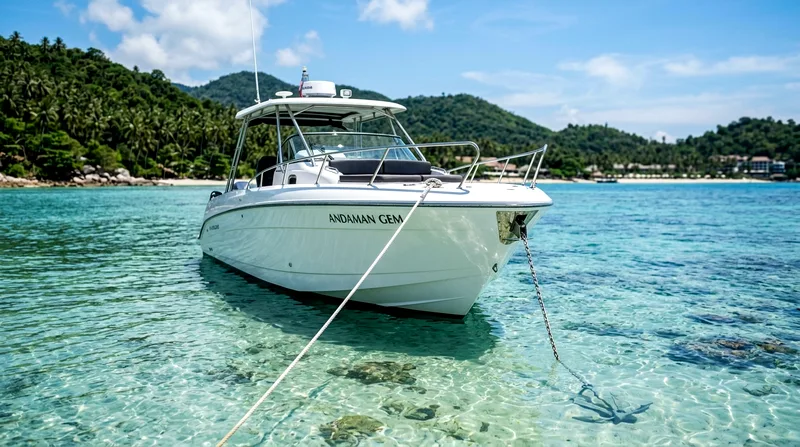
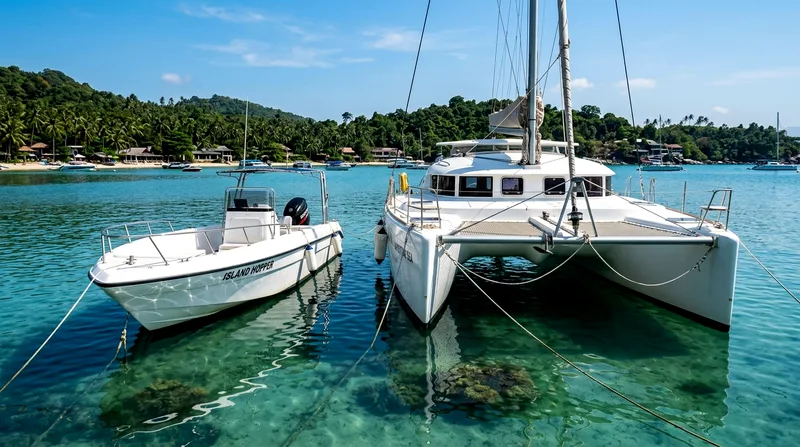
A speedboat is built for one thing: covering distance fast. Expect an open or semi-open hull, bench or jockey-style seating, and a ride that reacts to every swell. A catamaran — the twin-hull design used by operators like Lomprayah on routes between Ko Samui, Ko Phangan, and Ko Tao — trades raw speed for a wider, more stable platform with proper seating, sun decks, and sometimes a small cabin or snack bar. If you've taken the Seatran Ferry or a Lomprayah service between the Gulf islands, you already know the catamaran feel: steadier, slower, more like a small ship than a speedboat. For short hops to nearby snorkel spots, the difference matters less. For longer runs — Ang Thong, or the crossing toward Ko Tao — it matters a lot.
Speed and Travel Time
Time on the water is the clearest, most measurable difference between these two vessel types, and it's where speedboats have an obvious edge. A speedboat tour to Ang Thong National Marine Park from Ko Samui typically runs shorter than a catamaran covering the identical route, simply because a hull designed to plane across the water surface moves faster than a displacement-hull catamaran pushing through it.
Speedboat advantages
If your schedule is tight — say you're island-hopping from Samui to Koh Tao and back within a day, or you only have a half-day free before a flight — the speedboat's time savings are real and worth paying for. Less time traveling means more time at the snorkel stop, the beach, or the viewpoint. For solo travelers and couples on a short stay, this can be the difference between fitting in Ang Thong plus a sunset dinner, or just Ang Thong.
Catamaran trade-offs
The catamaran takes longer, sometimes considerably so on the longer Ko Tao or Ko Phangan routes, and that extra time is the trade-off for a smoother ride and more onboard space. For travelers who see the boat ride itself as part of the day — not just a transfer — this isn't really a downside. I'd actually argue the slower pace suits families and older travelers better, since nobody's rushing between stops feeling rattled.
Comfort, Stability, and Seasickness
This is the section that should drive your decision more than price. Speedboats sit low and light on the water, which makes them fast but also means they transmit every wave directly into the hull — and into your spine. Catamarans, with two hulls spreading the weight and reducing roll, handle swell far more predictably. If you've ever felt queasy on a long car ride or short-haul flight, assume the speedboat will amplify that feeling.
Rough sea performance
During the Gulf of Thailand's rougher months — roughly October through December, when swell builds from monsoon patterns — speedboats slow down anyway for safety, which cancels out some of their speed advantage while keeping the bumpy ride. Catamarans manage the same conditions with noticeably less pitching, since their wider beam resists the side-to-side rocking that triggers most seasickness. If you're booking during this window, lean catamaran unless the forecast is calm.
Onboard amenities
Catamarans generally offer toilets, shaded seating, sometimes a small snack counter, and enough deck space to walk around during the crossing. Speedboats rarely offer any of this — you're seated, often gripping a handrail, for the full ride. For a two-hour-plus trip, that difference in amenities becomes a real comfort gap, not a minor one.
Cost and Value
Price differences between speedboat and catamaran tours from Ko Samui aren't as dramatic as people expect, and value depends heavily on what's bundled into the ticket rather than the vessel alone.
Typical price ranges
Speedboat day tours to Ang Thong tend to sit in a moderate range, often slightly below comparable catamaran tours on the same route, reflecting lower fuel and staffing costs per trip despite the smaller group size. Catamaran tours can run similar or somewhat higher, partly because operators like Lomprayah build in more amenities and longer stops. Exact prices shift by season and operator, so treat any number you see online as a starting point — always compare current prices and inclusions before you book rather than relying on last season's listing.
What's included
Don't compare raw prices without checking inclusions. Some speedboat tours bundle lunch, snorkel gear, and national park fees; others charge those as add-ons, which can make a "cheap" tour cost more once you've paid for everything separately. Catamaran tours more often include buffet lunch and have space for a proper meal service rather than a packed box. Read the fine print on both before assuming one is the better deal.
Crowds and Passenger Experience
Group size and noise level shape the day as much as the water does, and this is where the two vessel types diverge sharply.
Capacity and space
A typical speedboat tour caps out around 15 to 25 passengers, which keeps things intimate but also means less room to spread out — you're seated close to strangers for the whole trip. Catamarans scale up to 50, 100, or more passengers on the larger Lomprayah-style vessels, with multiple deck levels. More people can mean more noise and longer queues for the toilet or snack bar, but it also means more space per person overall, since the vessel itself is so much bigger.
Noise and atmosphere
Speedboats are loud — engine noise dominates, and conversation during the ride is limited. It suits travelers who want an adrenaline-leaning day over a chatty one. Catamarans run quieter engines relative to their size and offer open deck areas where you can actually talk, read, or nap. For families with young children, that quieter, more forgiving atmosphere usually matters more than shaving 30 minutes off transit time.
Which Option Is Right for You?
There's no universal winner here — the right vessel depends on who you're traveling with and what you want from the day on the water.
Best for speed seekers
Solo travelers and couples with a single free day who want to pack in more — Ang Thong snorkeling plus a late afternoon on Koh Samui's beaches, for example — should book the speedboat. It's also the better pick if you're prone to boredom rather than seasickness, since the shorter transit keeps momentum. Skip it if anyone in your group has a history of motion sickness; the jolting ride makes that worse, not better.
Best for comfort and families
Families with kids, senior travelers, and anyone prone to seasickness should default to the catamaran, even if it means a longer day. The stability alone is worth the extra hour, and the onboard toilet and shade matter more than people expect once you're three hours into a trip. I'd avoid speedboats entirely for young children on choppy days — the pounding ride isn't dangerous, but it's miserable for a five-year-old, and for the adult holding them.
Frequently asked questions
Which is more comfortable in rough seas, a speedboat or catamaran?
Catamarans handle rough seas noticeably better. Their twin-hull design resists the side-to-side rocking that causes most seasickness, while speedboats sit low and transmit every wave directly through the hull. In swell, speedboat operators also often slow down for safety, so you lose much of the speed advantage while keeping the bumpier ride.
How much faster is a speedboat than a catamaran from Ko Samui?
On the same route — say, to Ang Thong National Marine Park — a speedboat typically covers the distance noticeably faster than a catamaran, often cutting the one-way transit time significantly. Exact figures vary by vessel and conditions, so check the specific tour's stated transit time rather than assuming a fixed difference.
What is the price difference between speedboat and catamaran tours?
Prices are often similar, with speedboat tours sometimes running slightly cheaper due to smaller group sizes and lower operating costs. Catamaran tours can cost a bit more but frequently include a fuller lunch service and more onboard amenities, so compare total inclusions, not just the headline price.
Which vessel causes less seasickness?
Catamarans cause less seasickness for most passengers because their wider, twin-hull build reduces rolling motion. If you or someone in your group gets queasy easily, prioritize a catamaran, sit toward the center of the vessel, and consider taking motion sickness medication about 30 to 60 minutes before departure regardless of vessel choice.
How many passengers can each boat type accommodate?
Speedboats used for Ko Samui tours typically carry around 15 to 25 passengers, keeping the experience small and intimate. Catamarans, including larger operators like Lomprayah, can carry anywhere from 50 to over 100 passengers, with multiple deck levels and more shared space despite the bigger group size.